













Following three of the hottest June days on record, it is becoming clearer that the UK’s schools, hospitals and care homes are ill-equipped to protect their vulnerable occupants. What needs to be done to upgrade these estates as temperatures continue to climb? Tom Lowe finds out
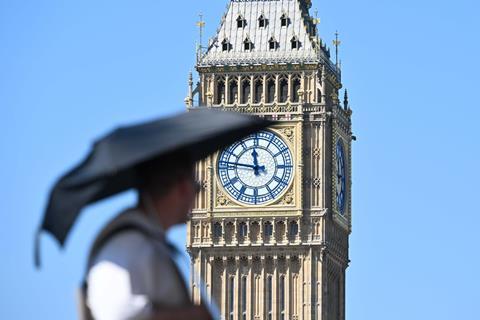
Much of the UK suffered sweltering conditions last week under three of the hottest June days on record, with temperatures soaring to at least 37 degrees in parts of the country.
The conditions experienced so far, this early in the summer, are unprecedented. The hottest May day on record was last month at 35.1 degrees in London.
Last year was also the UK’s hottest year on record. In fact, four out of the five hottest years are the last four consecutive years, and, given the temperatures seen so far this year, 2026 looks like a strong contender to join that list.
The climate is heating up at a rate which is alarming for both the public and for climate scientists. The official UKCP18 climate predictions for 2050 and 2080, used to inform the design of buildings, have been revised upwards this year because of the increased rate of climate heating.
Record heat exposes public estate vulnerability
In one expert’s view, most public buildings in the UK are poorly equipped to deal with this kind of heat. “We have massively underestimated the impact of climate change in all the climate change scenario modelling, and we haven’t designed any buildings in the UK to meet these current conditions,” says Cundall partner and climate expert Simon Wyatt.
We have massively underestimated the impact of climate change in all the climate change scenario modelling
Simon Wyatt, Cundall
Even the buildings being built today are “only just about capable of working”, Wyatt says, and none of them have been designed to withstand the new forecast for 2050, which, Wyatt warns, is “likely to be a significant underestimate”.
While the impact of hotter and more frequent heatwaves will be felt by people living and working in their own homes, it is also looking increasingly like a looming crisis for the public sector.
Schools face the sharpest immediate risk
Schools are the most at-risk type of public sector buildings, with children typically being more vulnerable to the heat than the adult population. Class sizes of 30 or more pupils contained in one room, and health and safety measures that limit how far windows can open, typically to an angle just 10 degrees, exacerbate the danger.
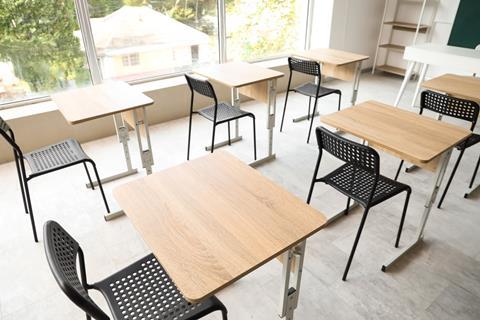
More than 2,400 schools in England and Wales completely or partially closed last week due to high temperatures, according to the BBC. This has a knock-on effect on the wider economy, with parents often having to stay home to look after children who are not in school. New build schools, particularly those built in the last five years, have typically incorporated passive cooling measures which mean they can stay open in hot weather. Ironically schools in older buildings - those dating to the Victorian era with higher ceilings and thicker masonry walls - have also fared better in the heat.
But the bulk of the school estate, those built in the latter half of the 20th century and early 21st century, with thinner walls, lower ceilings and much more glazing, are much more at risk of overheating.
It is a particular blind spot in the UK, where public authorities have been slower to recognise the impact of overheating compared to other countries in Europe.
“We advise lots of European countries on adaptive works,” says Christian Dimbleby, head of sustainability at Swedish architectural practice White Arkitekter. “But that’s not really happening as much in the UK.”
So what is the scale of the work that needs to be done?
“There’s a large amount of the school estate that very much just needs to be fast-tracked towards replacement, if we’re going to take it seriously, and we’re going to really do this properly for the country,” says Paul Cooper, partner and sector specialist in schools and academies at Ridge and Partners, who has worked on around 50 school newbuild or refurbishment projects over the last two decades.
“We advise lots of European countries on adaptive works…But that’s not really happening as much in the UK.”
Christian Dimbleby, head of sustainability, White Arkitekter
One of Cooper’s more recent projects was Beaulieu primary school in Chelmsford, which has remained open during the current heatwave. Despite having south-facing class rooms, the school has stayed at moderate temperatures due to solar shading and passive ventilation interventions.
In older schools, the temptation for school authorities is often to install air conditioning. This is both unnecessary and a wasteful “sticking plaster” in the long term, Cooper says, because of operating costs that will quickly wipe out any saving from the cheaper upfront cost, particularly given the likelihood of even hotter summers in years to come.
“The moment we start putting more money into air conditioning, keeping these schools cooler, that’s a pound that gets taken away from education and the kids, so we need to continue to be passive first,” Cooper says.
Passive cooling: what actually can be done?
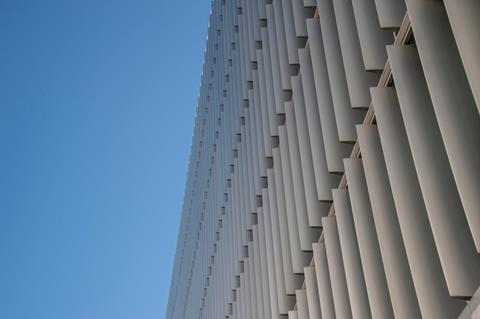
Measures can include higher performing glazing, which can cut out around 40% of solar gain on hot days, solar shading including brise soleil on the facades of buildings, and simple passive ventilation measures including mechanical vents. In post-war school buildings with lots of glazing, these can often be added easily by replacing one window panel in each classroom with a ventilation grille.
Other interventions that come at a higher upfront cost but offer longer term cooling include ground source heat pumps, which can circulate cool water around the school in pipes. This is a low carbon solution with typically low operating costs, relying only on a pump to transport naturally cooled water from underground.
Cheaper and quicker measures that can be taken can include replacing hard ground surfaces with grass, which absorbs more heat, or painting buildings in lighter colours that better reflect the sun’s rays.
Dimbleby supports the use of natural insulation materials including hemp, which he claims also benefits from a better fire safety performance compared with other organic materials, as an effective way to slow the transfer of heat from exterior walls to building interiors.
“Rolling out lots of these standard interventions could be delivered wholesale across a lot of the school estate,” he says. “A lot of them are very typical, very similar. They have standardised units, so it could be possible to roll those out rapidly.”
Hospitals and care homes need urgent review
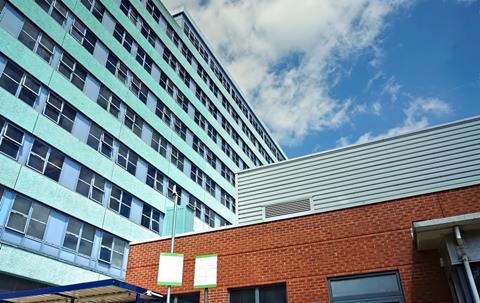
Hospitals and care homes face similar risks of overheating, both containing large numbers of vulnerable individuals often housed in buildings that were designed without much consideration towards managing sustained hot weather. Again, health and safety requirements to limit how far windows can open, intended to stop people from either falling or jumping out, have made it harder to cool down rooms.
“It’s poor design and poor foresight,” Wyatt says. He believes the UK “needs a fundamental shift on how we design buildings.”
NHS buildings are in need of a “wholesale review” of overheating risk, Wyatt warns. “Pretty much all of the government estates are in a state of disrepair and need serious attention, and because of health and safety they’ve probably bypassed and undermined the original design intent in terms of things like ventilation.”
Most public sector estates have been looking at decarbonisation plans in recent years, but Wyatt advocates coupling these with adaptation measures. “What we should be doing is taking into account carbon and climate change adaptation at the same time, but that needs to be a wholesale review of every single building in the UK and Europe, and that is a significant cost, which we have no idea how to fund at the moment.”

Interim measures which are likely to become more common in the years ahead include cool “refuges” in buildings, including those in the public sector and apartment blocks.
But the weather seen over the past two months has made it clearer that a longer term solution is needed in buildings which are most at risk.
“You can’t hide from it, can you?” says Cooper. With the UK on course for its hottest summer on record, that question is becoming harder for building owners, policymakers and funders to ignore.







No comments yet