

















Backed by private equity, buoyant from no fewer than 18 acquisitions and expecting to turn over £460m in its current year, the Welsh repairs contractor has grown sevenfold in just three years. Its co-founder and chief executive talks to Carl Brown about the firm’s background, strategy and what comes next
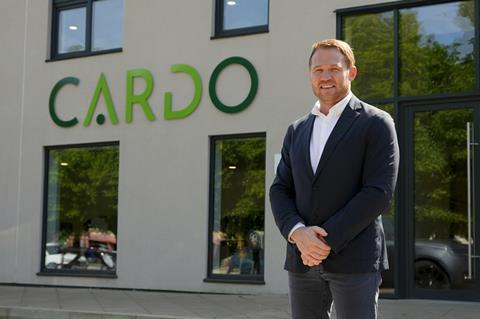
If it had not been for the global financial crisis and a sports injury, Liam Bevan’s housing journey may well have turned out very differently. The chief executive of fast-growing social housing repairs contractor Cardo Group is reminiscing about his first steps in business.
In 2008, Bevan had been about to start a trainee project manager’s position at Barratt Homes, where he had been an apprentice for two years, when the role was pulled due to the recession.
The Welshman then intended to be a self-employed carpenter but a shoulder injury suffered by the keen rugby and football player meant he had a period where he couldn’t work on the tools. He used the time to reflect and look at other options.
“That effectively made me write letters and emails and send leaflets to housing providers, and I had a response back from Hafod Housing in Cardiff, and they needed some support with some soundproofing works, some out of hours and general day-to-day repairs and maintenance,” he says. “And that was effectively how the business was founded.”
In its early days, Bevan’s business – and Cardo forerunner – LCB picked up smaller jobs while the big maintenance firms snapped up the multi-million-pound planned works contracts including jobs under the drive towards the Welsh Housing Quality Standard (WHHQ).
“We effectively picked up the crumbs that nobody else wanted,” Bevan smiles.
Fast forward to 2026 and Cardo is positioned to become a maintenance giant itself. Backed by private equity, buoyant from no fewer than 18 acquisitions and expecting to turn over £460m in its current year, Bevan’s business has come a long way in a relatively short space of time.
He sits down with Building to share more about his journey to date and his plans for Cardo for the future.
We effectively picked up the crumbs that nobody else wanted
Cardo’s growth has been fast by any measure. In just three years, its annual statutory turnover has increased from £36m to £239m, and the firm is targeting an almost doubling of its revenue to £460m this year (see graph). Bevan believes acquisitions will allow Cardo to increase its annual turnover by £100m to £150m in the longer term. If this transpires, it won’t be long before the firm is a £1bn-turnover company.
But how did it get to this point? Bevan starts by talking about the firm’s ethos and selling point.
“When we set out on this journey, there was, in my opinion, a lot more contractors could do for customers around getting the quality right, getting the compliance right, getting the efficiencies right,” he says. “Too often they [the established bigger contractors] were being pretty sloppy at the delivery of repairs and maintenance and saw it as a burden.”
For Cardo, repairs and maintenance, particularly routine and reactive maintenance in social housing, is “right at the heart” of what the firm does, rather than as an optional extra or afterthought alongside “bigger and shinier” capital works.
Bevan says the firm has people at its heart who have committed their careers to social housing, such as co-founder and executive chair Jane Nelson. The latter spent many years working in building operations for Hackney council and held senior roles at contractors Kier and Mears, but she is also familiar with the client side having sat on the board of ALMO Barnet Homes and Westward Housing Group.
Bevan says the group’s model of acquiring firms and allowing the companies’ owners to “roll their equity” – ie take a stake in Cardo – means they effectively have “regional leaders or specialists” who are entrepreneurs with a local knowledge and focus under a federated structure.
So what is Cardo’s focus? Bevan is a big believer in “getting the basics right” and says he has put that at the heart of what Cardo does.
A recurring revenue model
The business operates in what he calls “four pillars of service”, namely repairs and maintenance, planned works, compliance and energy services. It operates almost exclusively for public sector clients and housing associations, with around 90% of its work from the social housing sector. The rest covers councils’ non-domestic buildings, leisure centres, schools, universities and health buildings.
Cardo is targeting organic growth of around 10% to 12% but much higher growth through acquisitions. So what does it look for in terms of businesses to buy?
Bevan is as clear about what Cardo does not do as what it does. He likes the consistent, steady and recurring revenue that you get through routine repairs and maintenance, as opposed to large capital projects with more volatile and inconsistent income and risk.
In numbers: Cardo Group
£460m expected turnover in current year
£239m turnover in most recent year
£9.5m pre-tax profit
65% annual pre-tax profit growth
2,458 employees
18 firms acquired
52 offices
Source: Cardo accounts and statements
“Stuff like eco funding is too sporadic and doesn’t tick a box for us,” he says. “In construction and development, there’s too much design and build risk. So we tend to steer away from that and even cladding remediation.”
Despite this clear criteria, there appears to be little shortage of firms that meet the bill. Cardo, which now operates across the UK and Ireland, has acquired 11 firms in the past 18 months. These range from electrical maintenance firms and plumbing and heating companies to passive fire specialists.
Bevan says, smilingly, that it may sound “counterintuitive” but he doesn’t actually like buying firms that are really fast-growing. “Where there’s a business that has turned over [for example] more than £5m last year and made £250,000 in profit and then the next year they have turned over £20m and made £4.5m in profit, I don’t see that as sustainable. I see that as a red flag.”
He adds: “So, when you strip out the acquisitions of our business, we have got a really steady increase of organic growth rate.”
Turning to private equity
How is this all funded? There is no doubt that the decision to take private equity investment in 2023 has been a key factor.
Buckthorn Capital Partners owns 47% of Cardo, Bevan owns around a third and the remaining 20% or so is held by around 20 minority shareholders, including the bosses of some of the firms acquired.
Bevan says of Buckthorn: “These guys have got credibility with banks and lenders around debt and leverage that we just wouldn’t have.
“Your ability to raise capital is far better with a partner and a sponsor than it is on your own, you know. We would not have achieved anywhere near what we’ve been able to achieve without the sponsor behind us.”
Private equity can conjure up stereotypes about over-leveraged businesses having to hit exacting short-term targets. “That isn’t the approach of our partners, they are about building a sustainable business that’s focused on quality and they have been clear on that,” he says.
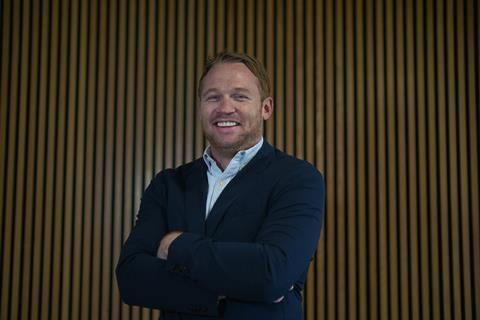
He says Cardo has not been overly loaded with debt either, with leverage three times EBITDA (earnings before interest, taxes, depreciation, and amortisation) which Bevan compares favourably with other firms.
“We have been really sort of ‘vanilla’ in terms of the leverage that we have put on the business and what the business can afford, and it gives a huge amount of downside protection,” he says.
Public sector ethos and a ‘work hard’ mentality
It is clear that Bevan is entrepreneurial, but also that he has a public service ethos, with a great deal of pride in doing a good job for bodies providing essential services such as social housing.
He explains how he grew up in Ely, Cardiff. His dad worked for “two of the big four” consultants on VAT and then ran his own business. His mother worked for the local authority and later set up a business running educational courses for councils, such as the first driving speed awareness course.
“They were employed and really grafted and then they started to own their own businesses and be more entrepreneurial. Inevitably I got dragged into it,” he says.
He remembers as a teenager working in a tiny home office to help his mother’s business. “I was 14 or 15 years old, picking up the phone to people booking courses while she was out delivering the courses. And that was the real mentality of the family: work hard and, if you work hard, good things will come,” he says.
It is not hard to imagine that his father’s financial nous and his mother’s public sector contracts background, along with their entrepreneurialism, all rubbed off on the young Bevan.
I want to build a business that is known for having a legacy in the social housing sector
He also says he learnt a lot from playing football as a goalkeeper in Reading’s academy in his teens, regularly travelling on the train from Cardiff and playing under Brendan Rodgers, who went on to be the manager of Liverpool, Leicester City and Celtic.
His professional football career dreams failed to transpire and he was released at the age of 17. But he says: “It taught me a lot about professionalism and culture and teamwork and everything that goes with it.”
Cardo’s growth has been making waves in the housing and construction sectors and Bevan has certainly come a long way since a self-employed young man with a shoulder injury started phoning housing providers to offer his services. But ultimately he is keen to stress that he does not want the Cardo story to be solely about balance sheet growth.
“I want to build a business that is known for having a legacy in the social housing sector. Forget the metrics, the financials,” he says. “They are just a byproduct of the strategy.”
At a glance: Cardo’s recent acquisitions
April 2025: Cardo (South) Ltd acquires the roofing division of Breyer Group Public Ltd through part of an asset purchase agreement.
June 2025: Cardo (Scotland) Ltd acquires the assets of SERS Scotland Ltd, a specialist energy services operator in Scotland.
June 2025: Cardo (Wales & West) Ltd acquired the assets of SERS Group Ltd, a specialist energy services operator in Wales.
September 2025: The group acquires 100% of the shares in CTS Projects Ltd and CTS Projects (Ireland) Ltd, specialists in energy, compliance and property services.
December 2025: The group acquires 100% of the share capital of Faskin Group Ltd, a roofing specialist in Scotland.
January 2026: Cardo (South) Ltd acquires the assets of Gunfire Ltd, a passive fire safety specialist.
February 2026: The group acquires 100% of the share capital of Trident Maintenance Services Ltd, a cyclical and planned maintenance specialist operating across the UK.
May 2026: The group acquires 100% of the share capital of EFS Systems (UK) Ltd, a Wales-based electrical maintenance specialist.
July 2026: The group acquires 100% of the share capital of RLUK Fire Ltd and its subsidiary R Lewis & Co (UK) Ltd, a passive fire safety specialist based in Wales.
August 2026: The group acquires 100% of the share capital Correct Contract Services Ltd, a plumbing and heating specialist based in Andover.
October 2026: The group acquires Norfolk roofing business Aspect Group Services.







No comments yet