






This is part of a special report produced in partnership with Gleeds
Victoria Marwa Heilman describes starting her story as “usually the hard part”. But her journey into architecture – and into social impact – is one defined by determination, redirection and purpose.
Based in Dar es Salaam, Tanzania’s largest city, she was born in Mwanza in the north of the country before moving to the capital as a child. Today, Dar es Salaam is home to almost six million people – “10% of the country’s population” – and it is here that Heilman has built both her practice, Alama Architecture, and Tanzania Women Architects for Humanity (Tawah), the non-profit organisation of which she is now executive director.
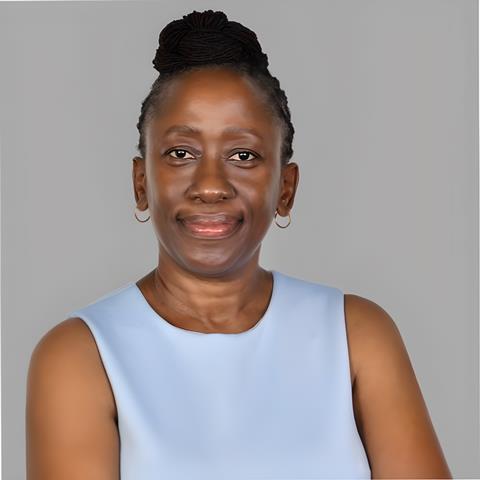
Her route into architecture was far from straightforward. Growing up, she wanted to become a doctor. “All through high school that was my goal. I just wanted to be a doctor.” But after narrowly missing the grades for medical school, she found herself working as a receptionist at the electric company. It was an uncle who intervened, suggesting architecture as an alternative.
It was only later, after completing her master’s and volunteering with Habitat for Humanity in Tanzania, that she understood the parallels to her original ambition. Working on projects in rural communities, she began to see architecture not simply as buildings, but as service. “Doing something, you feel like it’s small. But then to someone who is receiving that project, it is huge.” In that realisation, she found her calling. “We could also work with the communities and empower them,” in a comparable way to doctors, she explains.
>> Download the Women in Construction 2026 special report <<
Heilman initially combined practice with academia, becoming the first female teaching staff member in her department at university – at a time when, she says, “there was only a secretary who was female staff” among the faculty. The absence of visible role models created moments of doubt. “You start feeling: Am I in the right path? Is it this really for women?” she says.
Balancing career progression with motherhood was another defining challenge. “Balancing motherhood, balancing work, that was not an easy thing.” She credits a supportive husband and siblings for enabling her to continue, describing her family as “a community already”. Without that support system, she suggests, the path would have been far harder.
In 2018, she stepped away from academia to focus fully on her ventures. Alama Architecture – formerly VK Green Architects – runs alongside Tawah, which has grown into a 21-member organisation with 14 full-time staff. Since 2023, Heilman has served as executive director, acting as what she describes as “a connector between partners who are supporting us, communities that we work with and staff that we have in their office”.
Tawah’s most significant achievement to date is its vocational training centre for women in Tanzania’s coastal region. The programme brings women from across the country to learn how to build homes, before constructing houses for elderly residents in rural communities. “I consider it one of the biggest projects that I’m super-duper proud of,” she says. The scale may be modest, but the impact is profound – for the elderly recipients and for the young architects involved. Seeing her team witness that impact, she adds, is equally meaningful.
The work has received international recognition, including a World Habitat Award. For Heilman, the significance lies not in scale but in validation. It demonstrates that “other people who are not architects” can see the value in “that small approach of architecture that considers people”.
Her architectural inspiration is Francis Kéré, whose community-led approach she admires. Architecture, she believes, must also serve “those who cannot pay us”. It is a philosophy that defines her own work.
Her mission now extends beyond projects, to female representation. Rather than placing responsibility solely on institutions, she believes women already in leadership must act: “Make sure there is another woman sitting at the table with you, rather than just sitting alone.” Support, visibility and collective responsibility are key.
Asked whether she sees herself as a role model, she hesitates. “I feel like I’m trying to be a role model.” Through Tawah, she aims to solve the problems she faced herself – particularly around motherhood and career progression – by creating platforms where women can ask questions openly.