













A roundtable held by Building in partnership with Ridge and Partners brought together senior industry figures to discuss whether the sector needs a broader ambition – one capable of holding together climate action, resilience, wellbeing, biodiversity and long-term economic value
For much of the past decade, net zero has provided the built environment with a clear – and much-needed – sense of direction. It has shaped policy, underpinned investment decisions and driven meaningful change across design, construction and operation. But as we confront an era of rising social inequality, climate instability and political volatility, the sense is that carbon reduction alone cannot define success.
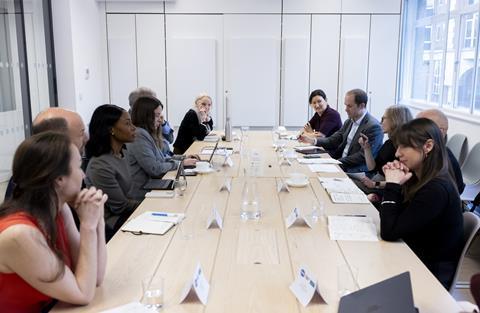
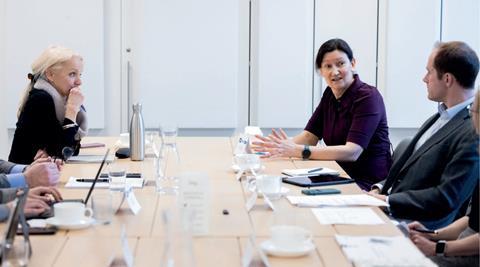
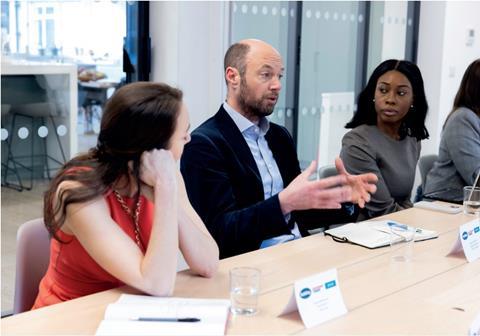
That was the starting point for a roundtable held in partnership with Ridge and Partners and chaired by Building editorial director Chloë McCulloch. Senior figures from development, housing, culture, sustainability and policy gathered to discuss whether the sector now needs a broader ambition – one capable of holding together climate action, resilience, wellbeing, biodiversity and long-term economic value.
Rather than positioning regenerative development as a replacement for net zero, participants explored whether it offers a more complete organising principle: one that reframes the industry’s role from minimising harm to actively improving the places it touches.
Net zero: powerful but increasingly fragile
There was no dispute around the table that net zero remains essential. But there was growing unease about its limitations – both practical and political.
From a policy standpoint, Anna Hollyman, co-head of policy and places at the UK Green Building Council, warned that net zero risks becoming a victim of its own success. “It’s been incredibly effective as a rallying point,” she said, “but it has also narrowed the conversation. We’re now at a point where adaptation, resilience and social outcomes are just as critical as mitigation.”
What is regenerative development?
There is some debate about the exact definition of regenerative development, but it clearly goes beyond sustainability or net zero by seeking to create places that actively improve environmental, social and economic systems.
Rather than aiming to “do less harm”, it focuses on:
-
Restoring and enhancing natural ecosystems
-
Supporting long-term health, wellbeing and social cohesion
-
Building local skills, jobs and economic resilience
-
Designing places that can adapt to future change.
Crucially, regenerative development is place-specific. It cannot be reduced to a checklist or single metric – instead requiring collaboration, long-term stewardship and a systems-based approach to value.
Several participants pointed out that the industry has become highly proficient at carbon accounting, but far less confident in addressing wider system impacts. Developments can meet operational targets while remaining vulnerable to overheating, flooding or social disengagement – particularly as climate risks intensify.
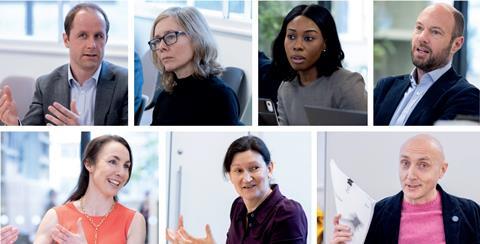
“We’ve become very good at measuring carbon, but much less confident at measuring what actually makes places work,” said Amanda Williams, head of environmental sustainability at the CIOB. Phil Kelly, partner at Ridge, concurred, arguing that “the ‘net’ in net zero’ means that by its definition it is focused on a single site within a red line boundary, which doesn’t capture the nuance of how sites interact with place around them”.
The politicisation of net zero was also a concern. With the term increasingly contested in public discourse, there was a sense that relying on it alone may be risky. For some, regenerative development offers a way to reframe ambition around outcomes people can see and feel – healthier neighbourhoods, stronger ecosystems and more resilient local economies.
Moving from ‘less bad’ to actively better
At its core, regenerative development was described as a shift in intent. Rather than asking how development can reduce its negative impact, it asks how it can generate positive outcomes – environmentally, socially and economically.
Lauren Bailey, head of social value at Ridge, framed it as a mindset change that needs to happen early. “Regeneration ought to start with a broader range of questions defining what good looks like,” she said. “Who benefits from this place? What does it give back? And how does it continue to deliver value over the project lifecycle, not just at completion?””
Katie Burrell, director of design, estate and capital programmes at the V&A, noted that for organisations with long-term custodial responsibilities, regenerative thinking feels intuitive. “We’re planning for centuries,” she said. “That forces a focus on adaptability, relevance and resilience – not just performance against today’s metrics.”

David Lewis of Rivington Hark argued that regeneration only succeeds when developments are designed to perform well long after practical completion. “If you judge success purely at handover, you miss the point,” he said. “The real test is whether a place still works in 10, 20 or 30 years’ time – socially, economically and environmentally.”
However, he also stated this can be a barrier, as often those behind projects are struggling to simply achieve viability, let alone having the ability to consider their long-term wider value.
Crucially, participants stressed that regeneration is not about applying a universal template. What constitutes regenerative development in a dense city centre will differ from a suburban housing scheme or a cultural quarter. That context-specific nature makes it harder to codify – but also more meaningful.
Learning from practice
While much of the discussion was conceptual, there was a strong emphasis on learning from projects already attempting to apply regenerative principles in practice.
Kelly pointed to two major schemes with which Ridge has been involved – one in Birmingham and one in Manchester – as examples of how regeneration can be framed around long-term place outcomes rather than short-term yield.
Around the table
| Chair: Chloe McCulloch | Editorial director | Building |
| Lauren Bailey | Head of social value | Ridge |
| Jess Barton | Development manager | Edit |
| Katie Burrell | Director of design, estate and capital programmes | V&A |
| Russ Edwards | Project director | Latimer by Clarion Housing Group |
| Anna Hollyman | Co-head of policy and places | UKGBC |
| Phil Kelly | Partner | Ridge |
| David Lewis | Managing director | Rivington Hark |
| Donna Mckitterick | ESG director | Get Living |
| Alastair Mumford | Programme director | MCS Foundation |
| Amanda Williams | Head of environmental sustainability | CIOB |
In Birmingham, he referenced work within the city’s Smithfield area, where development has been anchored around education, health and research institutions: “The focus hasn’t just been on buildings, but on how different uses support one another – skills, jobs, public realm and long-term civic value.”
Discussing Manchester, attention turned to large-scale regeneration around former industrial land, where investment in landscape, connectivity and social infrastructure has been central to creating a place that works beyond office hours. Kelly argued that these schemes demonstrate how regeneration can align commercial viability with wider civic ambition – but only where landowners, local authorities and delivery partners are aligned over the long term.
Russ Edwards, project director at Latimer by Clarion Housing Group, also highlighted the approach being taken on his organisation’s garden community project in Colchester, which will provide around 7,500 new homes, including much-needed affordable homes, to the east of Colchester in an entirely self-sufficient new community.
It will be delivering new schools, a country park, new healthcare and retail, leisure and job opportunities, alongside infrastructure and new facilities to serve new residents as well as benefiting existing communities.
Edwards said one of the central elements of the project has been working with young people to feed what they think is important into how the future of the community looks – and pointed out this was key to making it a success.
“You need to have scale to oversee the growth, change and development of a place,” he said. “Central government has to ensure all these new garden towns and communities are taking a regenerative approach, otherwise it is a huge missed opportunity.”
Structural barriers to regenerative delivery
Despite enthusiasm for the concept, the roundtable was candid about the structural barriers that continue to hold regenerative development back.
Viability emerged as a recurring challenge. Donna McKitterick, ESG director at Get Living, noted that many regenerative benefits – from improved health outcomes to stronger community cohesion – accrue slowly and indirectly. “They don’t always show up in a residual land value calculation,” she said. “But that doesn’t mean they aren’t real.”
There was also a warning against allowing the scale of the challenge to stall progress altogether. Bailey stressed that regenerative development should not become a reason for inaction.
“There’s a risk that regenerative development becomes a reason for hesitation. In reality, regeneration has to be a journey; it’s about committing to better decisions over time, not waiting for perfect solutions before the project commences.”
Procurement was also identified as a critical constraint. Kelly argued that lowest-cost, single-stage contracting often strips out the very collaboration on which regenerative development depends. “If teams come together too late, much of the opportunity to design in long-term value has already passed,” he said.
Edwards added that regeneration demands a different attitude to risk. “These projects are complex by nature,” he said. “They need stable partnerships, patience and trust – not constant re-procurement and short-term thinking.”
Policy, resilience and the role of leadership
Participants agreed that policy has yet to fully catch up with regenerative ambition. While many local authorities talk about placemaking and sustainability, planning frameworks often remain compliance-driven and siloed.
Several participants also pointed to a lack of joined-up thinking across government as a fundamental barrier to regenerative delivery. Responsibilities for housing, transport, energy, health and skills remain fragmented across departments, often working to different objectives and timescales.
The result, those around the table argued, is development policy that encourages siloed solutions rather than the integrated, place-based approaches demanded by regenerative development.
Without greater co-ordination at national level, there is a risk that local authorities and delivery partners are asked to solve systemic problems without the tools or alignment needed to do so.
Regenerative outcomes, the group agreed, rely on planning, infrastructure investment, social policy and environmental regulation pulling in the same direction – something that remains the exception rather than the rule.
Hollyman highlighted the UKGBC’s Climate Resilience Roadmap as an attempt to shift that narrative, particularly by elevating adaptation alongside mitigation. “We’re already living with the impacts of climate change,” she said. “If we’re not designing for resilience now, we’re locking in future failure.”
Institutions with long-term stakes in place – including cultural bodies, housing providers and major landowners – were seen as crucial leaders in this transition. Their ability to think beyond electoral or funding cycles positions them well to champion regenerative outcomes, provided policy supports them to do so.
People, skills and long-term stewardship
A consistent thread in the discussion was the importance of people – both those who live in regenerated places and those who deliver them.
Jess Barton, development manager of Edit, stressed that regeneration must be co-created with communities. “If people don’t see themselves reflected in a place, it won’t thrive,” she said.
“Social value isn’t something you can bolt on at the end.”
Alastair Mumford, programme director at MCS Foundation, highlighted the role of skills and education. “Regenerative development should leave behind capability,” he said. “If development doesn’t create pathways into jobs, training and long-term opportunity, it’s not regenerative.”
There was also recognition that professional education needs to evolve. Systems thinking, collaboration and long-term evaluation are central to regenerative delivery – yet are often marginal in traditional training routes.
As the discussion drew to a close, there was a clear sense that regenerative development is not a silver bullet – nor a simple rebrand of net zero. But it does offer a more expansive, hopeful framework for a sector grappling with complexity.
Rather than focusing solely on what development should avoid, it reframes the conversation around what it should actively create: healthier people, stronger ecosystems and places capable of adapting to an uncertain future.
As Bailey summarised: “Net zero tells us what to reduce. Regenerative development asks what we want to leave behind.”
Key takeaways from the roundtable
♦ Net zero remains essential – but incomplete
Carbon reduction is a baseline, not a full definition of success.
♦ Regenerative development reframes ambition
It offers a more holistic lens for decision-making, centred on people, place and long-term value.
♦ Delivery models must evolve
Current procurement, funding and viability frameworks often undermine regenerative outcomes.
♦ Leadership and collaboration are critical
Long-term partnerships and early engagement are essential to success.
♦ Skills and communities matter
True regeneration invests in people as much as physical assets.