















All articles by Thomas Lane – Page 22
-
News
Internal insulation
Kingspan Kooltherm insulation has been used to reduce heat loss through the walls of four terraced houses in Page Hall, Sheffield. The empty homes were chosen by the council as demonstration projects to show local people what could be done to improve the energy performance of small, solid-walled terraced housing. ...
-
News
Sliding window system
Aluminium fenestration specialist Sapa Building Systems supplied its Dualslide sliding window system for a housing refurbishment in Fulham, west London. The £1.6m contract was carried out by fabricator and installer Hazlemere Windows. Dualslide is available in horizontal and vertical formats and was supplied with a bespoke interlock detail to allow ...
-
Features
Roofing battens
John Brash JB-RED roofing battens were used on BRE’s refurbishment of a Victorian stable block at its Garston site near Watford
-
 Features
Standardised schools: Here’s one we made earlier
Thanks to a streamlined procurement and design process, councils can now choose a school from a brochure and get it delivered in just 13 months. Is this a revolution in the classroom
-
Features
Changing the rules: Make's straw bale cladding at University of Nottingham
Architect Make decided a new university biosciences building deserved the UK’s first straw curtain walling system. So how did they do it?
-
 Features
Blackfriars station: Pulling out the stops
Blackfriars station is being rebuilt on a bridge right over the River Thames. With a four-lane road to the north, live railway lines on all sides and the river below, it’s not the easiest site on which to deliver a complex project. So how was it done? Thomas Lane buys ...
-
 News
NewsBDP's Northampton Station goes to planning
BDP designed scheme first phase of major redevelopment by Network Rail
-
 Features
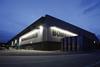
Winging it: Bombardier aircraft factory
Air traffic gridlock over the holidays might have put you off flying for life. But Bombardier is launching a new plane with high-tech carbon fibre wings - first, though, it needed a factory that could be designed in tandem with those wings
-
Features
Projects of the year 2010: Take it to the max
The big, the beautiful and the bonkers - Ike Ijeh and Thomas Lane dish out the awards to an international array of projects that helped keep construction headlines lively in 2010
-
 News
NewsGLA calls for new rules for timber frame
Greater London Assembly wants new measures to reduce the risk of fire in timber framed developments under construction in the capital
-
 Features
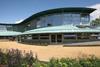
Sustainability Awards 2010: The winners and runners up
Who are the clients, contractors, designers and manufacturers leading the way in boosting green construction? Well, many of them are right here. Here we list the winners and runners-up in this year’s Sustainability Awards
-
 News
NewsArup Associates scores double win at Sustainability Awards
The winners of the 2010 Sustainability Awards were unveiled at a ceremony in central London on Tuesday.Architect Arup Associates triumphed at the awards with a double win, scooping Sustainable Designer of the Year and Sustainable Project of the Year (over £10m) with its Harlequin 1 TV studio for broadcaster BSkyB. ...
-
 Features
Nomura’s office fit-out
Invesment bank Nomura wanted its £100m, 400,000ft2 offfice fit-out completed in eight months, the problem was finding a contractor able to work at that pace. Building finds out how Como, Mace’s fit-out arm, managed to race to the finish line
-
 News
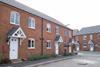
NewsOnsite power generation levels announced
Zero Carbon Hub announces proposals for how much carbon should be emitted using onsite solutions for new zero-carbon homes
-
 News
NewsQueen unveils design for Foster's Abu Dhabi museum
Zayed National Museum on Saadiyat Island will showcase the history and culture of the Emirates
-
 Comment
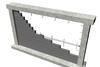
Innovation in blockwork: The Wi Beam
In an industry notoriously cautious of innovation, it’s quite something to meet a brickwork contractor who’s not only inventive but also prepared to see his inventions through
-
News
Energy loophole to save housebuilders £1bn
Housebuilders will save almost £1bn by exploiting a loophole allowing them to bypass tough energy standards introduced in October
-
 News
NewsHousebuilders save £1bn with Part L loophole
178,400 homes pre-registered with Building Control before the introduction of 2010 Part L will be built to lower energy standards
-
 Comment
Is the Green Deal a good deal?
This is the only government initiative targetting the energy efficiency of existing homes but it should be seen as just the start…
-
 Features
Laboratory of Molecular Biology: Master of science
The Medical Research Council’s new chromosome-shaped lab in Cambridge is an example of how attention to detail and planning can deliver complex buildings on time and to budget