





This is part of a special report produced in partnership with Gleeds
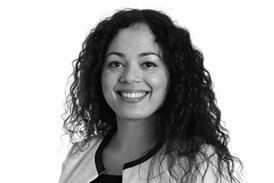
Basima Abdulrahman’s career has been shaped by conviction. A structural engineer by training, she began her academic journey in Iraq, graduating in 2008 before securing a full scholarship to complete a master’s in structural engineering in the US. Her future then seemed relatively clear-cut: further study, perhaps a career in academia, and a conventional professional pathway.
That certainty was disrupted in 2015, when Abdulrahman made the decision to return to Iraq just as Isis was taking control of large parts of the country. “I knew I wanted to contribute,” she says, “even though I didn’t yet know what that contribution would look like.”
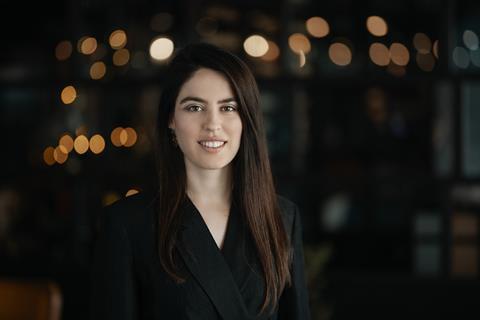
That decision proved pivotal. She joined the UN, where she spent three years working for the Food and Agriculture Organization – a specialised agency of the UN that leads international efforts to defeat hunger. It was during this period that her passion for sustainability crystallised.
Abdulrahman began to recognise that energy – particularly clean, decentralised energy – was fundamental not only to rebuilding infrastructure, but also to restoring dignity, livelihoods and long-term stability. She also realised that to pursue this ambition, she would need to take a risk. “I reached the point where I knew I had to do this on my own,” she explains.
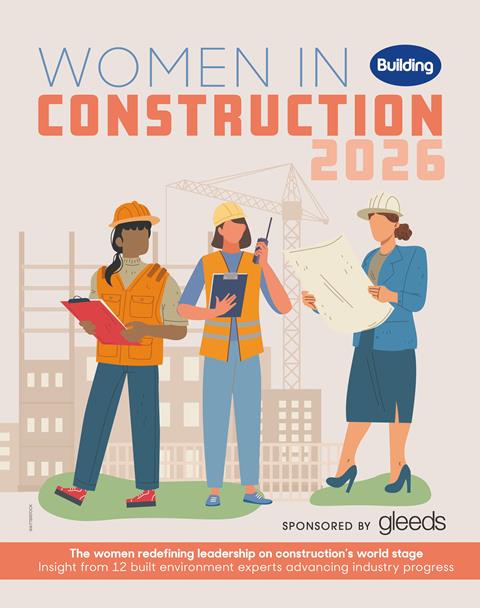
>> Download the Women in Construction 2026 special report <<
In 2017 she obtained her professional accreditation from the US Green Building Council and began building what would become Kesk. The company was formally established in 2018, initially operating with a small team and limited resources.
Its early years were defined by persistence: it took nearly a year to secure its first two projects. Today, Kesk employs around 30 people across Iraq, working on green energy consultancy, solar infrastructure and software-enabled energy solutions.
As founder and CEO, her role is expansive and demanding. Her days are dominated by strategy, partnerships and relationship-building: meeting potential clients, negotiating with banks and institutions, forming alliances with delivery partners, and representing the company at high-level events. Alongside this external-facing work sits the responsibility of leadership.
“Taking care of the team is a huge responsibility,” she says. “You have to be present, be decisive, and ultimately be the problem-solver.” Training managers, making critical decisions and steering the business through uncertainty all fall squarely on her shoulders.
That uncertainty is a constant. Operating in a region affected by geopolitical instability and security challenges has forced Abdulrahman to become highly adaptive. “Every few years, something happens,” she says. “You think you’ve reached a peak, and then a shock comes along that hits very hard.”
Projects can be lost overnight, business models disrupted and hard-won progress undone. Her response has been to accept volatility as part of the landscape. “We can never say, ‘This is it.’ We have to plan for the speed bump – or even the concrete wall – and be ready to redesign how we work.”
Among the projects that have defined her career, one stands out for its social impact. Working with an NGO, Kesk supported a displaced community from the Sinjar region, helping around 70 farming families secure sustainable livelihoods through solar-powered microgrids, greenhouses and small-scale farming. Rather than relying on expensive diesel generation, groups of families shared renewable energy systems, reducing costs and creating long-term resilience. Much of the work was delivered at minimal or no cost. “For the team, it was incredibly rewarding,” Abdulrahman says.
Her journey as a woman leading an engineering and energy business has not been without struggle, even within her own organisation. “Sometimes I feel like I have to fight for the right to be the boss,” she says. Early on, she adopted an open, democratic management style, but found it often worked against her. Male colleagues were confident, dominant and quick to challenge decisions, while she found herself second-guessing her own authority. “It took me years to realise that I needed to adapt,” she says. “Women have to be very aware of these dynamics. We are not given space – we have to claim it.”
Her message to women entering the built environment is that while progress is possible, it requires resilience, clarity and persistence. “Where it might take a man six months to reach a position, it can take a woman seven or eight years,” she says. “You really have to want it.” Despite the challenges, she remains unequivocal about the value of the journey. “There is a lot to fight for,” she says. “But it is worth it.”



No comments yet