











The northern city region has grown at twice the rate of the rest of the country over the past decade after delivering a long-term regeneration vision. It is now looking to new mechanisms to share the wealth more evenly across the whole combined authority, Joey Gardiner reports
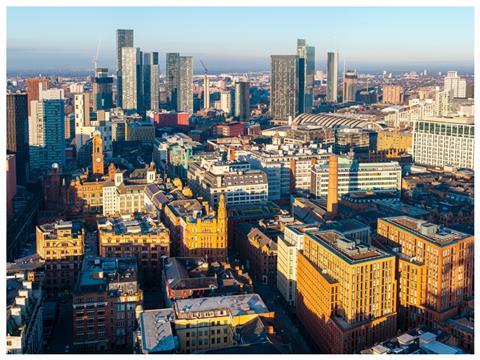
Greater Manchester mayor Andy Burnham came to this year’s Mipim property conference last month in a confident mood. The elected combined authority boss will already have known about a £675m fillip, announced the following week, from the government and the National Wealth Fund, which nearly doubled the city region’s regeneration resourcing pot, the Good Growth Fund, to £2bn. He also may have been aware that the chancellor Rachel Reeves would at the same time announce plans for “fiscal devolution” to city regions – something that could have a huge impact on its ability to invest in big ticket projects over the long term.
“Every year, I think we’re that little bit more confident, that little bit stronger,” he said. “The next decade in Greater Manchester will be the best in our city region since the Victorian period. That is not an idle boast.”
Other cities may weary of the Mancunian swagger, but it has its roots in reality. While the huge economic performance gap between London and other UK cities remains true, less well known is that Manchester has been closing it. A report released by the Greater Manchester Combined Authority (GMCA) in January this year showed that the city region was the fastest growing part of the UK between 2015 to 2023, growing at twice the rate (3.1%) of the rest of the economy (1.5%). In 2023, for the first time, provisional data shows the city region economy topped £Richae100bn in GVA.
For Manchester, the challenge now is how to keep this growth going while spreading the benefits of it to all parts – particularly the relatively deprived northern authorities such as Oldham, Rochdale, and Bolton. The Good Growth Fund, a largely recyclable fund allied to a pipeline of priority projects, is the vehicle for getting this done. So, how has Manchester achieved all this – and how does it plan to use this growth fund, and potentially fiscal devolution beyond that – to take growth to the next level?
Manchester’s rebirth: from IRA bombing to £100bn economy
This year marks 30 years since a 1,500kg bomb was detonated by the Provisional IRA from a lorry parked in Corporation Street, severely damaging much of the city centre and prompting a major reconstruction. The quality, vigour and energy of the response, led initially by Sir Alan Cockshaw and then increasingly by city council leader Richard Leese alongside his legendary chief executive Sir Howard Bernstein, has defined the trajectory of the whole city region ever since.
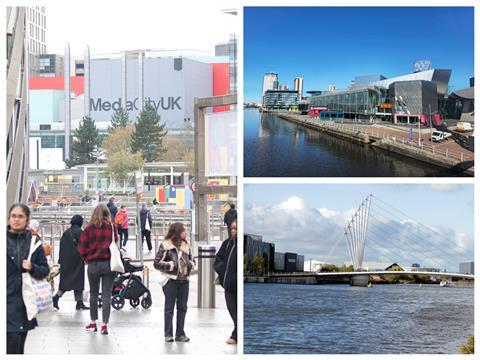
High-profile city centre glass and steel projects such as the Beetham Tower, Media City (in Salford) and Spinningfields defined the bounce back, while the city has also managed to deliver much lauded urban regeneration. Eamonn Boylan, the former chief executive of the GMCA who spoke to Building for this piece before his unexpected death at the start of the month, said: “The best example is Ancoats. When I first started working for the city council in 1982, Ancoats was a wild place, wildly dangerous. It’s now regarded as the coolest urban neighbourhood in Europe.”
Caroline Baker, managing partner at property agency Cushman & Wakefield in the North-west, says: “Sir Howard and Richard said what they were going to do and just did it.”
During this period, Manchester councils co-operated via the Association of Greater Manchester Authorities (AGMA), meaning that, when the government in 2010 started thinking about restructuring local government around city regions, it was first in line, with the mayoral combined authority set up in 2011.
Paul Richards, deputy chief executive at Stockport City Council, one of the 10 authorities making up the GMCA, says co-operation has now been the “natural” way of life since before devolution. “We have lots of engagement, we meet every two weeks,” he says. “We talk about the bigger issues around regeneration and place and growth like grown-ups.”
C&W’s Baker, says: “The whole thing gives confidence. Knowing you have a grown-up, sophisticated public sector gives huge confidence to private investors coming in.”
Factfile: Greater Manchester Combined Authority
Population: 2.9 million
Region’s economic productivity as GVA (gross value added): Circa £100bn
Mayor: Andy Burnham (Labour)
Constituent councils: Bolton Council; Bury Council; Manchester City Council; Oldham Council; Rochdale Borough Council; Salford City Council; Stockport Metropolitan Borough Council; Tameside Metropolitan Borough Council; Trafford Council; Wigan Council.
Total homes built 2022/25: 29,926
Integrated settlement:£2.71bn 2026/27 to 2029/30
Indicative 10-year affordable housing programme funding:£1.8bn
City Region Sustainable Transport Settlement:£2.5bn 2027-32
The Manchester way: Strategic vision over grant dependency
The city’s approach has not been to go cap in hand seeking grants, but instead set a vision and seek to bend available support to deliver its priorities. Boylan said: “With Manchester, it was always about realisation of a long-term vision.
“You’ve seen it in the city centre, but you’ll also see it with [the proposed new town] Victoria North. The new town designation will make no difference whatsoever to that scheme. They will use whatever the designation brings as a way to deliver what they wanted to do anyway.”
You have got to have a strong economic core to drive wider prosperity
Phil Mayall, Muse
For years, the priority in the city has been driving the economic potential of the city core, with the belief that a rising tide would raise all boats. Phil Mayall, MD of regeneration developer Muse, says: “It coalesced around the notion that, if the sort of Salford/Manchester city centre core is successful, then that will radiate out. You have got to have a strong economic core to drive wider prosperity.”
Proud Greater Manchester towns such as Stockport, Oldham and Middleton have tacitly needed to agree not to – in Mayall’s words – “overpoliticise” the distribution of funding. Stockport council’s Richards says: “We’re realistic that Manchester is the 600-pound gorilla that sat seven miles up the road. It’s an international city, and there’s an absolute understanding that the success of Manchester is the success of the region.

“Having an international city that can attract the Brits, the Champions League final or whatever – we should absolutely lean into that, that’s just reality.”
It is perhaps hardly surprising then, that over half of the housing and over a third of the employment floor space planned in the combined authority’s five growth locations are to be built out in either Manchester or Salford themselves [see panel below]. However, Stockport has had success in turning its economy around using a mayoral development corporation to deliver town centre regeneration, with 1,200 homes and 170,000ft2 of office space built out and Muse’s ECF joint venture recently selected to build the 1,200-home Stockport 8 scheme. Now other parts of Manchester are looking to the same model.
Late last year, Stockport got sign-off to increase the size of its development corporation, and the combined authority approved the setting up of new mayoral development corporations or development zones in Bolton town centre; Oldham; Atom Valley/Northern Gateway; Middleton; Ashton – Stalybridge; Leigh and Old Trafford and Western Gateway.

Manchester’s five growth locations
The city region has prioritised five areas particularly given their enhanced opportunities for growth. It sees potential for 177,000 homes and 6.8 million sq m of employment floorspace across these five areas.
They are:
| Growth location | No of homes | Employment floorspace (m2) | Key projects |
|---|---|---|---|
| Airport and Southern Growth Corridor | 13,571 | 362,919 | Stockport city centre regeneration; MIX Manchester |
| Central Growth Cluster | 100,465 | 2,387,422 | Media City; Oxford Road Corridor; Manchester Piccadilly |
| Eastern Growth Cluster | 4,366 | 239,495 | Ashton town centre regeneration; Godley Green garden village |
| North-East Growth Corridor | 20,989 | 1,775,144 | Atom Valley |
| Western Gateway | 20,533 | 1,197,697 | Port Salford; Trafford Park; Old Trafford regeneration |
| Northfold | 17,128 | 851,618 | Housing sites in Wigan and Bolton |

The move is designed to help spread the benefits of growth across the conurbation – with the organisations backed by the new growth fund. Burnham told the Mipim audience that he planned to use the Good Growth Fund as the tool to “get to the places that haven’t felt the growth so far”.
“We are the UK’s fastest growing city region,” he said. “We’re proud of that. But, if you look at the city, it’s in certain hot spots, it’s concentrated in certain locations. And we have now got to build from that and take it out much more widely.”
The fund approach enables both a longer-term view and a “portfolio” mind-set, allowing the GMCA to take on schemes in areas where the viability is much more challenging. Henri Murison, chief executive of the Northern Powerhouse Partnership, says this is an evolution of what happened under Sir Howard Bernstein and Eamonn Boylon.
“Greater Manchester has moved away from just giving grant, to recyclable funds that are constantly growing and are able to be redeployed,” he says. “It is a is a very innovative example of how the public sector can unlock growth.”
Becca Heron, strategic director of growth and development at Manchester City Council, explains that the combined authority is essentially trying to provide a “single front door for schemes that require additional funding to unlock viability”. This means developers can access grant, or what Manchester calls “flexible funding”, which might include social housing funding. In addition, she says they can access “evergreen funding, which is the loan funding”.
Factfile: Good Growth Fund
Fund size:£1.98bn
What the fund comprises: Mix of different funding sources including: £300m Greater Manchester Pension Fund; £314m transport Funding; £500m National Wealth Fund; £175m City Investment Fund (HM Government); Other funds from GMCA’s £2.71bn integrated settlement to 2029/30
How much has been spent: GMCA launched the fund last year with the intention of six-monthly allocation rounds. Two tranches of allocations have been made, with £820m now committed.
How does the funding work: The point of the fund is to address viability issues preventing projects going forward, and includes grant and loan funding. Loans are recycled, which when repaid return to the fund to help other schemes.
How it is allocated: The Combined Authority launches a “call for schemes”, which essentially asks for developers to put forward oven ready schemes within the GMCA’s integrated pipeline to local authorities for consideration
Andrew McIntosh, director of sustainable growth and infrastructure at the GMCA, says investing in places for the long term is not only right for the places involved, such as Oldham, where it has put £31.5m in to a town centre regen scheme, but also allows the GMCA to share in the financial gain when values improve – the so-called “regeneration premium”. He adds: “We expect that regeneration to have positive benefits for Oldham town centre, which hopefully will enable us to recover a bit of the money in 10 years’ time. It’s patient equity. We are driving regeneration benefits that will materialise in increased property values.”
However, McIntosh says the GMCA has “no specific targets” for the amount of funding that will go outside of the city region’s Manchester-Salford core, despite the mayor’s call to spread growth further afield.
How Manchester de-risks development to attract private investment
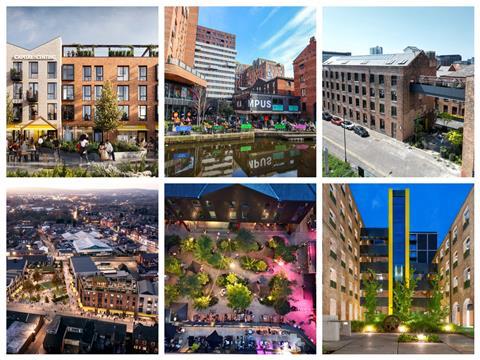
Tim Heatley, co-founder of Manchester-focused regeneration developer Capital & Centric, which is delivering workspace and residential schemes such as Talbot Mill in Manchester, Weir Mill in Stockport, and Farnworth Green in Bolton, is full of praise for the approach. “We’ve been lucky because the GMCA has created one of the absolutely most investable city regions in the UK. A lot of that is down to consistency in approach, and a promise to collaborate and to support.”
There is nowhere near enough to go around and do everything that the city wants to do, let alone in Greater Manchester
Becca Heron, Manchester City Council
Of course it is not without difficulties. “A lot of the challenge is about viability,” Heatley says. “Viability isn’t a unique thing to Greater Manchester. But what they do is they de-risk, and that’s the innovation bit. That is how they can unlock schemes that otherwise wouldn’t happen.”
Developers who have worked in the city appear to have confidence that the public sector will step in if important schemes are struggling. Caroline Baker says: “It’s the importance of being able to have an idea, work it up as a proposal, and then to know that there might be a possibility to have a sensible conversation with the GMCA and scope for some funding.
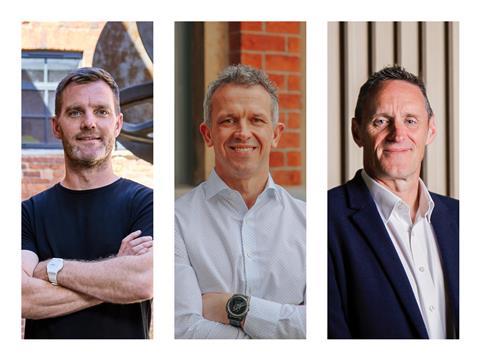
“In other parts of the country, if there are any additional costs, that is down to you. At least in this environment there is a potential – if it’s an important enough project – there’s a route to having a conversation to a solution.”
James Whittaker, MD of regeneration developer Peel Waters, behind the 4,000-home Manchester Waters and 3,000-home Trafford Waters schemes, says honest conversations are key. “You will then have an open conversation with Andrew McIntosh, with a team that’s at the combined authority,” he says, “and they will tell you straight away whether you are barking up the wrong tree.”
Public-private partnerships: Addressing concerns over developer relationships
There have been suggestions in the past that public-private sector relationships in Manchester have been almost too close – with outsiders sometimes struggling to get a market foothold – while firms including Renaker, Salboy and Capital & Centric have delivered multiple major schemes. Capital & Centric’s Heatley says this is explained simply by the fact the public bodies in Manchester are being discerning about what they fund.
“They can’t fund everything, and they don’t want to either, because not everything has the best intentions for the people of that place at its heart,” he says. “And that’s their job – part of their role is to suss out who the good guys are. There are investors out there that just want to extract value and clear off.”
On this subject, Eamonn Boylan said: “There are some very long-standing partnerships that that that have delivered for the city over years. I would never criticise a public authority for trying to let its values influence its choices of partners. I think that’s really, really important.”
However, GMCA’s McIntosh says any idea of a cosy relationship is “not a fair reflection”. He adds: “Public sector procurement processes that have been run by the local authorities have been open public tenders that have complied with procurement legislation, so everyone has had a fair chance.”
“Sometimes the procurement maybe reflects the fact that people have got a successful track record, actually delivering things that have been really good, and you think – well, yeah, we want we want to have more of that.”
Never enough: The funding gaps that remain
If there is a weakness, McIntosh thinks it is that the GMCA could be doing better at driving social value through its funding – “we need to get better at that”, he says. However, from outside the organisation, the principal critique is that, despite its success in recycling cash, using the benefits of devolution freedoms and levering in extra investment, the GMCA still does not have enough money to do what it is setting out to do.
Manchester council’s Heron says: “Even with the flexible approach to the funding, there is nowhere near enough to go around and do everything that the city wants to do, let alone in Greater Manchester.”
The GMCA would like to have more money. With the Building Safety Act, and with what is happening globally, viability is a significant challenge
Caroline Baker, Cushman & Wakefield
Caroline Baker says: “The GMCA would like to have more money. With the Building Safety Act, and with what is happening globally, viability is a significant challenge.”
The GMCA’s McIntosh says this applies both in the city centre and the lower value locations in the surrounding conurbation. “Even now, the vast majority of projects in the city core are unviable,” he says.
Where viability is worse, in other parts of the city region, often only grant will work as many schemes will not be able to take on repayable loans. “When we talk about a portfolio approach, it’s different degrees of unviability. What we won’t end up with is a portfolio that all pays back. We fully expect that we will take a loss.”

Fiscal devolution: Manchester’s £12bn infrastructure opportunity
It is this desire for ever more funding that makes the chancellor’s announcement last month of potential fiscal devolution to mayoral authorities such a potential gamechanger. Rachel Reeves said she would give the powers to “those places that have the greatest capacity to deliver them”, and the Northern Powerhouse’s Murison says he would be “very surprised” if Manchester does not win the biggest slug of fiscal freedoms. “It’s earned the most autonomy,” Murison adds.
Those powers could allow Manchester and other councils to borrow against future growth in retained tax receipts and use the cash to spend on otherwise unfunded infrastructure projects. Becca Heron says the council is exploring how fiscal devolution might, for example, help to fund the proposed undergrounding of the Northern Powerhouse Rail/HS2 station at Manchester Piccadilly, a project which HS2 has costed at as much as £12bn.
McIntosh says the Piccadilly scheme is one “potential” option of many that could be financed through the devolution powers, with transport infrastructure likely to be prioritised. “It’s very evident that transport connectivity is a sort of primary barrier to bringing some of our key strategic developments forward at pace, and having fiscal devolution will open the door for us to be able to move forward with certainty around some of those larger infrastructure projects,” he says.
Certainly, at this point in time, you would not bet against Manchester managing to pull this off. As Andy Burnham told the Mipim crowd, the powerhouse of the industrial revolution had suffered “long term de-industrialisation” through most of the 20th century. “But we’re coming back now,” he said. “We’re coming back strong.”
Through ongoing analysis and expert commentary, Regen Connect highlights the policies, funding streams and local priorities that matter most to the construction and development sector.
This coverage will culminate in a special report to be published at our Building the Future Live Conference in London on 7 October.
How you can get involved:
Throughout the year, our team will be gathering insight from across the sector to inform editorial features, debates and events. We welcome contributions from practitioners who want to share experience or shine a light on emerging trends.
Click here for more on the campaign
Be part of the conversation – contact us to contribute or get involved by emailing our deputy editor at dave.rogers@building.co.uk and to find the campaign on social media follow #regenconnect





No comments yet