

















The last year has dashed hopes of a rapid return to growth with the Labour government’s housebuilding programme. Joey Gardiner assesses which firms have managed to navigate choppy waters successfully, and whether the seas look any calmer ahead
This was the year that things were supposed to get better. After the horror of soaring build costs and the Liz Truss-assisted spike in interest rates in the years since 2023, the new government – and its much-vaunted return to quiet competence – was presumed to deliver a gradually improving market picture.

Instead, the picture in 2024 and early 2025 – as shown clearly in our data listings on the UK’s top 50 housebuilders – is of a tricky and flat market, one that more recently has started to deteriorate. Bob Weston, chair of Essex-based housebuilder Weston Homes, which reported a loss of £8.6m in the year to July 2024 on falling sales, does not shrink from using the R-word, even though official national statistics show the economy managing anaemic growth. “I’ve been through four recessions in my career,” he says. “I call this a housing recession.
“This is the first where I can’t see anything on the horizon likely to make it get any better.”
>>Click here for the Top 50 Housebuilders table<<
>>Click here for the Top 150 Contractors & Housebulders table<<
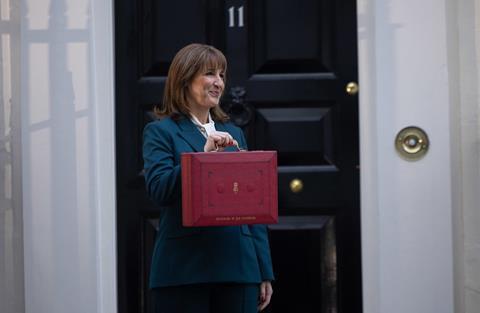
The figures from the UK’s top 50 housebuilders, according to their latest reported accounts, show that turnover overall (accounting for inflation) was broadly flat. Profit, meanwhile, was sharply down, with the majority of housebuilders reporting a drop in the number of homes built. Since these full-year figures were published, trading updates and market reports suggest that sentiment has somewhat worsened over the summer, with concern in the run-up to Rachel Reeves’s Budget last month – and potential changes to property taxes – casting a long shadow over market sentiment.
As well as the overall market, the numbers of course highlight which firms have navigated this tricky market most successfully – and which have not. So, what impact has it all had, and what is the outlook for the year ahead?
A flat market
The top 50 housebuilders earned £35.1bn in revenue in their most recent financial years, exactly 5% up on the figure seen last year. Bearing in mind inflation of around 3.5% during the period, that represents a slight uptick in turnover beyond general prices. However, this picture was more mixed in reality, because most of that numerical change could be attributed to three companies that had good years: Barratt Redrow (assisted by its merger), Persimmon and Bellway. The majority of the companies in the list – 26 of them – actually saw turnover fall.
A similar picture comes through in terms of homes built. While the overall number completed by the top 50 was up, by 3% to 104,054 homes, this increase was largely accounted for by just a few big companies, led by Barratt Redrow, Bellway and Vistry. Most others went into reverse. Though not all provided the data, from those those that did, far more firms saw completions fall than rise. Completions declined for 23 firms, versus 15 that saw an increase, while the average change in output in the year was a 3.5% drop in homes delivered.
In terms of profitability, the firms’ results for the year were straightforwardly worse: £2.95bn of operating profit was recorded, 9.6% below last year’s figure. Even this figure is again flattered by the strong performance of a few very big companies that bucked the trend and became more profitable, notably Barratt Redrow and Hill. In fact, two-thirds of firms saw profits fall, with the operating figure falling by 42% on average. Eleven firms actually reported an operating loss. Even Andy Hill, founder and group chief executive at housebuilder Hill, which outperformed the market as a whole, says: “It’s been very slow on the selling side. The market’s just been dead.”
Risers and fallers
The period (unsurprisingly) saw Barratt Redrow, with turnover of £5.58bn, cement its dominance of the turnover-based rankings, given this was its first year recording combined figures following the August 2024 merger of Barratt with Redrow. Analyst Charlie Campbell, managing director of equity research at investment bank Stifel, says the business had a good year, even though the number of homes delivered was well below the combined volume of Redrow and Barratt as independent firms in the previous year. “They managed the integration well,” he says.
David Thomas, chief executive of Barratt, says his firm’s performance was “solid” in the year, given a “market hampered by affordability and consumer confidence challenges which impacted demand”, adding: “Our results were underpinned by an exceptional operational performance.”
Vying for first place with Barratt Redrow was Vistry. The partnerships housebuilder for the second year in a row built more homes than Barratt – 17,225 versus 16,565 – but its focus on lower-priced homes for housing associations meant that the revenue brought in was more than £1bn less, at £4.33bn. The firm, which last year talked of targeting growth to build more than 25,000 homes a year, ended up with its 2024 earnings taking a £150m hit after a series of profit warnings related to understated cost projections on nine developments at its Southern division. Stephen Teagle, chief executive of partnerships and regeneration at the business, says those “challenges” have now been dealt with, through changes to management, structures and processes, to ensure there will be no repetition.
Stifel’s Campbell, though, says investors may take longer to regain their former faith in the high-growth business. “The market has quite a long memory. I think the jury is still out on Vistry,” he says.
Others from the top 10 to have struggled include Taylor Wimpey, which, despite retaining its third-place spot, saw turnover and profit fall, and Bloor Homes, where revenue dropped 7% to £1.25bn. Clyde Lewis, deputy head of research at investment bank Peel Hunt, says: “Taylor Wimpey seems not quite sure what it wants to be at this point, while its 2020 rights issue has not really delivered the step up in profitability promised.”
Taylor Wimpey said in 2020 that its £515m share placing was designed to allow it to invest in land at higher margins coming out of the covid crisis, a decision the firm defended despite the fact a subsequent property boom meant there was little drop in land values to take advantage of.
Despite this difficult market, some have prospered. In the top 10, most notably Persimmon, Bellway and Hill have outperformed, with Miller Homes also growing to make its top 10 entry for the first time.
Jason Honeyman, chief executive at Bellway, says the business delivered a “good” performance which leaves it “cautiously optimistic” about the current year, given its “high-quality landbank, strong balance sheet and the operational capacity in our divisional structure”.
Bellway’s 16.9% turnover jump is the only increase that prompts an order change within the top 10 (beyond the removal of Redrow from the rankings). Bellway leapt over the static Berkeley, to make fifth place.
We’re in the right geographies where the market is more resilient. If I was selling £1.25m homes inside the M25, I’d be uncomfortable
Andrew Duxbury, Persimmon
Andrew Duxbury, group chief financial officer at Persimmon, puts the firm’s 15% turnover growth in part down to its investment in sites, largely in the north and Midlands, over the past few years when other builders were reducing land spend. However, he also says initiatives such as shared equity products are helping its buyers purchase homes. “We call it self-help. We’ve had planning success, but we’ve been driving hard for that. We’re in the right geographies where the market is more resilient. If I was selling £1.25m homes inside the M25, I’d be uncomfortable,” he says.
Hill’s strong performance – flat turnover to £1.15bn – is under-represented by the tables, given that the prior year’s figures cover a much longer, 15-month period. This means that the stable turnover shown effectively represents growth of around a fifth.
“We grew quite a bit, which was partly down to our entry into the buy-to-let market,” says Andy Hill, adding that the firm’s diversified business model, which encompasses homes for private sale, partnership housing, build-to-rent development and residential contracting, helps make it resilient in a downturn. “We’ve got a very mixed model and that makes us fairly good in a recession; we’re able to buy land when there’s a flat spot.”
Hill now has business plan to expand to £2bn turnover by the early 2030s, Hill says.
Miller’s rise to the number 10 spot, combined with its acquisition of St Modwen earlier this year – which is not reflected in these numbers – puts it on course to move further up the rankings in next year’s tables. “Miller is doing really well,” says Stifel’s Campbell. “The acquisition was a really good thing. They’re proving that selling a mid-premium product not in the south is quite a winning strategy, and they’re a good outfit as well. The numbers can stand comparison with anyone’s.”
The biggest winners in numbers
Highest percentage growth in turnover
| Overall rank | Company | Change in turnover (%) | Latest housing turnover (£’000) | Previous housing turnover (£’000) | Housing operating profit (£’000) | Homes built |
|---|---|---|---|---|---|---|
| 50 | Higgins Group | 128.6% | 31,184 | 13,643 | 2,216 | |
| 47 | Elivia Homes | 70.2% | 51,513 | 30,260 | -6,741 | |
| 26 | London Square | 51.7% | 213,041 | 140,409 | 3853 | 608 |
| 1 | Barratt Redrow | 33.8% | 5,578,300 | 4,168,200 | 285,500 | 16565 |
| 24 | Watkin Jones | 27.5% | 224146 | 175,739 | 3,566 | |
| 37 | Stonebond | 26.0% | 143,065 | 113,530 | 1,725 | 459 |
| 5 | Bellway | 16.9% | 2,782,800 | 2,380,200 | 250,700 | 8,749 |
| 27 | Telford Homes | 16.2% | 191,782 | 165,030 | -43,813 | |
| 4 | Persimmon | 15.4% | 3,200,700 | 2,773,200 | 369,200 | 10,664 |
| 33 | Hopkins Homes | 9.3% | 157,056 | 143,631 | 12,390 | 526 |
Highest operating margin
| Overall rank | Company | Operating profit margin | Housing turnover (£’000) | Housing operating profit (£’000) | Homes built | Operating profit per house sale | |
|---|---|---|---|---|---|---|---|
| 6 | Berkeley Group | 20.6% | 2,432,200 | 500,000 | 4,329 | £115,500 | |
| 11 | Morgan Sindall | 19.6% | 861,200 | 168,500 | 1,808 | £93,197 | |
| 46 | Abbey Developments | 17.3% | 74,980 | 12,958 | 318 | £40,748 | |
| 7 | Bloor Homes | 17.1% | 1,251,906 | 214,152 | 4,004 | £53,485 | |
| 45 | CG Fry and Son | 16.7% | 81,642 | 13,673 | |||
| 10 | Miller Homes | 14.1% | 1,060,200 | 149,200 | 3,813 | £39,129 | |
| 29 | Henry Boot | 13.6% | 178620 | 24,291 | 270 | £402,000 | |
| 44 | Castle Green Homes | 12.4% | 87,458 | 10,824 | 291 | £37,196 | |
| 4 | Persimmon | 11.5% | 3,200,700 | 369,200 | 10,664 | £34,621 | |
| 48 | Henmead | 11.4% | 43,363 | 4,941 | na |
No growth
While these figures show that some firms are finding ways to defy the gloom, the impact overall of the market appears to be that the majority of businesses are not expanding output.
Stifel’s Campbell says this slowdown seems to be in spite of the market fundamentals, rather than due to them, with interest rates having dropped half a point from peak and wages having risen in real terms. “In a normal market you’d be seeing 3% to 4% house price inflation. What we’ve got – 1% – is really disappointing,” he says. “This horrible Budget run-in with all the speculation about property taxes has just put a halt to everything.”
This horrible Budget run-in with all the speculation about property taxes has just put a halt to everything
Charlie Campbell, Stifel
Persimmon’s Duxbury agrees that in the UK while fundamentals had improved, the political situation “seems to have somehow conspired to take away consumer confidence”.
While Persimmon itself is expanding, having brought sites through planning over the past three years, Clyde Lewis says there is little reason for other builders, at a different point in their cycle, to rush to copy it. “Incentives needed to get a sale are at historically high levels right now, of around 5% to 6%. Why would they flood the market with supply and drive down returns further?”
He says the average return on capital employed over the last year for listed housebuilders – a metric measuring how efficiently firms turn investment into profit – was around half the level, at 7.4%, of the 10-year average. “Housebuilders are just not incentivised to put more capital into play and build more homes,” he says.
Of course, some builders are planning to grow – in addition to Hill, Barratt Redrow has medium-term plans to reach 22,000 homes per year, while Vistry now says it wants to top 20,000 homes. But opening more sites is not easy to achieve even for those that want to. “Last year the government said it would free up the planning system,” says Stifel’s Campbell. “But that message seems to have never got through to the actual planners. Barratt Redrow told us at the start of the year it would increase outlet numbers by 10% – but then by the summer it said the numbers were flat. They didn’t get the numbers through they thought.”
Outlook
Vistry’s Teagle says he expects trading to pick up next year as the housing associations that are its most important customers start to benefit from the £39bn 10-year affordable homes programme announced at the Spending Review. “We’re already seeing an increasing appetite to do deals from partners,” he says. However, others, including Andy Hill, think the registered provider market will take longer to rebound – while in the meantime, there is little hope of a big uptick in private housing market growth.
Partly this is down to the fact that few think the government is contemplating a major demand-side stimulus akin to Help to Buy for the housebuilding industry, with nothing to boost demand in the recent Budget. Weston’s Bob Weston says: “There’s no sense of it getting any better. I don’t think this government will do anything to tackle private demand.”
But it is also due to, as Teagle says, a general sense that “we don’t think there’ll be a big uptick in momentum”.
Without effective demand from both private homebuyers and the affordable housing providers, it is difficult to increase volumes quickly
David Thomas, Barratt
Barratt’s David Thomas says his firm will see a mid-single-digit rise in completions next year to a maximum of 17,800 homes, but that the market will remain tough.
“Affordability and consumer confidence are likely to remain a challenge,” he says. “Without effective demand from both private homebuyers and the affordable housing providers, it is difficult to increase volumes quickly and this is the first time in many decades there is no support for homebuyers available from government.”
Stifel’s Campbell blames government mismanagement for the lack of confidence that things will improve, despite the likelihood of two or three further interest rate cuts in the next 12 months, and wages set to grow ahead of prices. “On the pure numbers, there’s the making of quite an exciting demand and house price recovery story. But everyone’s paralysed with fear about a crazy government doing crazy things. It’s universal,” he says.
Bob Weston says that while the government has been focused on planning reform, it has missed the most important issue – the weakness of the private market. “The elephant in the room is the lack of demand. It’s the lack of the ability of buyers to get deposits and buy. It’s not a supply-side problem,” he says.
There are, alas, precious few voices suggesting next year will be significantly better.







No comments yet