

















As the government’s 10-year strategy begins to unfold, the president of the UK and Ireland business of the UK’s largest construction consultant tells Tom Lowe what the sector needs to do to avoid some of the mistakes of the past
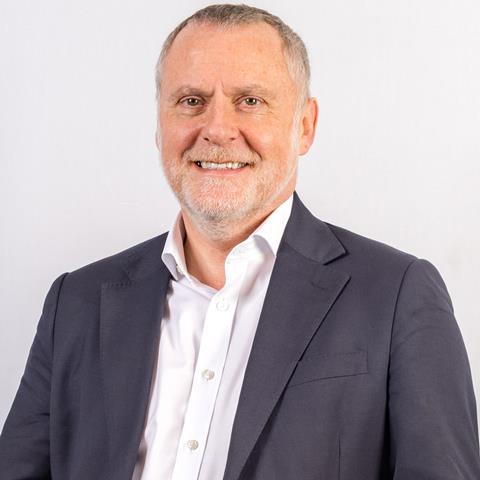
It is nearly two-and-a-half years since the global engineering giant SNC Lavalin rebranded as AtkinsRéalis. The £4bn group, based in Montreal, is the UK’s largest construction consultant, with 42 offices across the UK and Ireland.
It is a major player in the infrastructure sector and involved in the majority of the government’s long-term infrastructure projects spanning sectors including rail, power, water and highways. As a result, it is a company which plays an important role in how the UK’s infrastructure will function in the future – it has a voice deep into the heart of government. What it says matters.
In March last year, the firm appointed Chris Ball, its chief operating officer for nuclear, as company president for the UK and Ireland, replacing Richard Robinson, who became president of Asia, the Middle East and Australia. Ball has brought extensive experience of the nuclear sector to the leadership of the regional business, having worked in the field for almost his entire professional life.
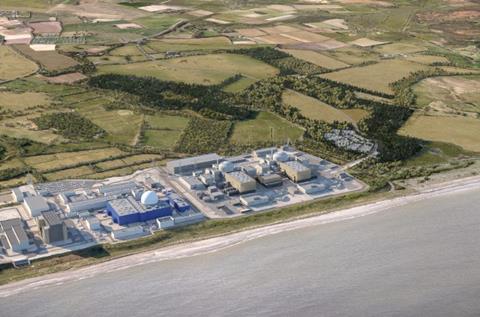
His appointment also sent a signal to the wider infrastructure sector as to what AtkinsRéalis sees as one of its major areas of growth. As the government embarks on a new era of nuclear power, from Hinkley Point C – currently under construction – to the planned Sizewell C and small modular reactors (SMRs) in the future, the consultant is leading the charge, with around 3,000 staff working in the sector in the UK alone.
Building visited the AtkinsRéalis London headquarters in Victoria to talk to Ball at the start of what the company sees as a key year for growth. The nuclear industry, he says, is “at the forefront of a renaissance” at the moment, being seen as a key contributor to decarbonising the UK’s energy production as the government edges towards its 2050 net zero target.

For Ball, the government’s renewed commitment to nuclear, after a long decline which began in the late 1990s, has a personal significance. He started his first job after graduating from Manchester University in 1994 as an engineer at Magnox Electric, the nuclear decommissioning firm which was rebranded in 2023 as Nuclear Restoration Services.
He worked at the Wylfa nuclear power plant on Anglesey, in north Wales, while his partner, now wife, had a slightly more glamorous job at the BBC in London.
“Our deal was: if the weather was going to be crap, I’d come down to London for the weekend,” Ball remembers. “If the weather was going to be great, she would come up to north Wales and we could go and sit on the beach – so I spent a lot of time in London as a result.”
His travel costs eased slightly when Ball moved to Bristol after joining AtkinsRéalis predecessor WS Atkins in 2000, where he eventually became managing director of the firm’s energy division in the UK and Europe. When Atkins was bought for £2.1bn by SNC Lavalin in 2017, Ball became EMEA managing director for nuclear and then, after a one-year stint as a director at EDF, moved back to the newly named AtkinsRéalis in 2023.
Chris Ball CV
1994-2000: Engineer, Magnox Electric
2000-17: Managing director for energy in the UK and Europe, Atkins Ltd
2018-22: Managing director for nuclear EMEA, SNC-Lavalin
2022-23: Director, EDF (UK)
2023 - present: Chief operating officer for nuclear, AtkinsRéalis
March 2025 - present: President for the UK and Ireland, AtkinsRéalis
His extensive experience working on public sector projects has given him an insight into how the wider infrastructure industry works with the government, and how it does not work. With the announcement in June last year of the government’s 10-year infrastructure strategy, which sets out a series of major programmes, the opportunities for infrastructure firms have been given greater clarity.
But clarity on pipeline does not automatically lead to more effective cooperation. With the delays and cost overruns on HS2 always present as an elephant in the room in any conversation about infrastructure, Ball offers some advice as to how the government and industry can together avoid some of the mistakes of the past.
The answer, for him, is using the industry’s expertise to enable faster delivery of government objectives. “My sense is this is about pace, and you look at various decisions that are being taken – whether it’s planning reform, whatever it might be – they all enable pace and support moving projects at pace and delivering benefits at pace,” he says. “As an industry, we need to make sure that we ourselves are maximising the pace at which we can move.”
But while government policy interventions intended to support faster delivery – such as watering down environmental restrictions on schemes – can play a role, Ball believes an equally important factor is infrastructure’s “self belief as an industry”. He suggests that those projects which have been less successful have dampened the industry’s confidence and prevented it from performing to its full potential.
“There are many projects that go brilliantly, like East-West Rail. There are many other projects that go brilliantly. But of course, the data point becomes those projects that don’t meet what anybody would want in terms of outcomes that everyone was striving for. They become the data point in this context,” he says.
“That can start to create this backdrop in people’s mind that causes the industry to lose its self belief over its ability, at times, to move at pace. I think it’s really important that we have that belief and support one another as an industry.”
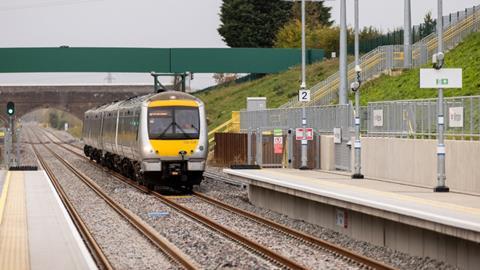
Industry optimists might argue that it is the ineptness of politicians, not engineers, which have created problems on projects such as HS2, where the leg between London and Birmingham became so expensive – partly due to interventions from local MPs demanding that trains travel via less intrusive but more costy routes in tunnels or dykes – that the rest of the line had to be cancelled.
But Ball suggests the industry has taken too passive a role in its relationship with government. “I quite often talk about a victim player mindset,” he says. “What more could we have done as an industry, to lean in to support government?
“I think there is something we need to do – and I’m not just talking about AtkinsRéalis but as an industry here – to lean in and say, ‘OK, how could we have leant into this in a different way?’ Having that conversation in a different way that actually attracts a different answer is where we need to get to.”
Ball says one area where this approach could be applied is supporting the development of business cases to speed up the pace at which decisions are made. The ability for the UK to attract private finance to support major programmes is a major factor in terms of successful delivery.
If we delay, delay, delay, I think we potentially lose interest. People start to question
While he believes the greater clarity on future public investments in infrastructure has helped to attract investors, he is mindful of the signals which are sent when projects are delayed.
“We are in a good moment in time in the UK to push on this now,” he says. “If we delay, delay, delay, I think we potentially lose interest. People start to question.”
Research published by AtkinsRéalis last year found 90% of institutional investors viewed the UK as an attractive destination for infrastructure over the next three years, outpacing all other global markets. But two thirds of investors also admitted walking away from projects because the business case did not stack up. Almost one in five said they would not strongly prioritise the UK over other regions, a statistic which could prove problematic as global competition for capital intensifies.
The report, published in October and based on more than 100 interviews with senior people at major institutional investors, includes three recommendations for incentivising investment. It called for business cases to be de-risked with robust contract frameworks, investors to be incentivised with innovative funding models which share risk, and delivery should use collaborative contracting approaches like alliancing with clear and reliable returns for investors.
Recommendations in the AtkinsRealis October 2025 report De-risk, Incentivise, Deliver. Funding UK Infrastructure for Growth
- De-risk: Through a joined-up delivery approach, with early integration of public sector, private organisations and investors to create delivery partnerships that align objectives in stronger contract frameworks across the lifecycle.
- Incentivise: Investment through innovative funding models that share risk and align incentives, underpinned by credible delivery plans, greater fiscal devolution and viable business cases for planning, construction and operational phases.
- Deliver: Programmes built around common outcomes and collaborative contracting models to provide a reliable return for investors, deliver at pace, and generate sustainable social and economic benefits to build thriving communities across the UK.
AtkinsRéalis has significant experience in maximising the investability of projects through its work with private finance in Canada. Ball wants to use this expertise in his conversations with government during the early stages of projects, when business cases are being crafted.
He sees the responsibility for successful and timely delivery as an “us thing, as an industry, as a collective, about how we take better ownership for ensuring the success of major projects in the UK and Ireland region”.
On the delivery side, he is a champion of the alliancing model, in which several contractors team up and share project teams. He sees the partnership approach as less of a “handshake or group hug” but more like a “best friend who tells you what you need to know, rather than what you want to know”.

“A good alliance creates this effectively safe space to have those conversations,” he says. “There’s no trying to back away from having the difficult conversations. And as a result, the nature of those conversations are far more fruitful.”
Major UK projects using alliancing include Balfour Beatty, Laing O’Rourke, and Bouygues Travaux Publics on Sizewell C and AtkinsRéalis, Laing O’Rourke, and VolkerRail on phase two of East-West rail. It is also being used on the government’s prisons programme, involving Wates, Kier, Laing O’Rourke and ISG, prior to the latter’s collapse.
Ball sees potential in the use of alliancing to boost the confidence of teams working on these nationally significant projects, and others planned as part of the 10-year infrastructure strategy. “Success breeds success. You get some early runs on the board, and you start to believe yourselves,” he says.
“It starts to feed an element of confidence in everything … I think the alliancing model has been right at the heart of that.”
Along with better business cases, it is the success of models like alliancing contracts which could prove helpful in cleaning up the UK’s image as a country which has struggled to deliver major infrastructure projects on time and on cost. The research which AtkinsRéalis published last year showed the government’s 10-year strategy has already had a positive impact on the market but more needs to be done to de-risk projects and get investors on side.
Ball sees the ongoing reset of HS2, driven by former Crossrail chief executive Mark Wild, as one opportunity to prove that the UK can be a safe location to invest. If done well, he says, “we become the centre of expertise … so that other countries are learning from us.”







No comments yet