















Ryder Architecture and its partners Northumbria University and University of the Built Environment are calling for a radical rethink of built environment education
When Reinvention: For an Exceptional Construction Industry was launched in 2018, it was a rallying cry for change in a sector too often trapped by its own complexity and compartmentalisation.
Ryder Architecture’s manifesto argued that only by industry and academia working collaboratively, developing the right skills and embracing technology could the built environment achieve its potential as one of the UK’s greatest economic and social assets.
Seven years on, the world looks very different. The pandemic has rewritten our working lives. Sir Martin Moore-Bick’s report on phase 2 of the Grenfell Tower fire inquiry exposed deep systemic failures in collaboration, competence and accountability.
Conflicts, inflation and climate volatility are reshaping the global economy. Yet in the face of all this, the same question lingers: how does construction break the cycle of report, reform then relapse?
“The built environment underpins national prosperity, yet it continues to suffer from decades of fragmentation, underinvestment and short termism” says Peter Barker of Ryder Architecture and co-author of Reinvention 2026.
“We’ve had enough diagnosis and speculation. It’s time to act and the starting point must be education. Actions speak louder than words and we have developed new educational models which we know can work.”
“Regulation and technology can only take us so far. Real transformation will come when we have a new educational model. This should be rooted in cross disciplinary, modular, work based learning and codesigned by industry and academia. This develops skills which are relevant to the future of the industry and provides opportunity for all, not just the privileged few”
Peter Barker, Ryder Architecture
The roots of the argument run deep. For three decades, the industry has been told what it needs to do: the Latham and Egan reports of the 1990s, Wolstenholme’s Never Waste a Good Crisis, and Mark Farmer’s Modernise or Die all identified the same familiar ills - adversarial contracting, lack of forward thinking, weak productivity and fragmented supply chains. Yet lasting progress has proved elusive.
“The tragedy of Grenfell brought those failures into sharp focus,” reflects Susan Dawson, associate professor at Northumbria University, co-authors of Reinvention . “It showed what happens when competence, communication and culture all break down.
If we want an industry where we have a sustainable supply of the right talent and equality of access for all, we need bring together the unique complementary systems of education and industry, each offering something the other cannot.”

That learning gap is now a national issue. The government’s Invest 2035: Modern Industrial Strategy warns that skills shortages threaten to derail growth across multiple sectors.
Construction is particularly exposed. The CITB estimates the industry needs 250,000 additional workers by 2028, but too many pathways into the profession remain rigid, expensive or irrelevant to modern practice.
“We talk about digital transformation and net zero, but we can’t deliver either without people who have grasped the fundamentals about working together and are given an affordable route into the professions,” says Ashley Wheaton, vice chancellor, University of the Built Environment, co-authors of Reinvention.
“We need a new educational model that’s equitable, collaborative and designed for the real world, not a bygone one.”
This vision isn’t hypothetical. In 2016 a cross disciplinary consortium, including Arup, Cundall, Turner and Townsend and Sir Robert McAlpine and led by Ryder Architecture, established a Plan for Built Environment Education.
This led to the creation of the award winning cross disciplinary PlanBEE apprenticeship in partnership with Gateshead College and a complementary degree apprenticeship qualification at Level 6.
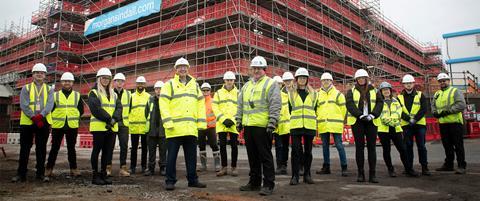
The Level 4-5 apprenticeship now operates in Manchester (with support from Manchester City Council), London, Newcastle and Vancouver. It provides salaried industry experience and education for young people, including those from underrepresented backgrounds, into professional built environment careers, acquiring the latest skills and cross disciplinary experience through rotational work placements with a range of industry employers.
With more than 150 graduates to date, 98% of whom have progressed into professional careers, this programme has fundamental principles which provide an inclusive and affordable route to build the professional workforce of the future.
The programme has been recognised in several awards, most recently the Queen Elizabeth Prize for Higher and Further Education in November 2025.
A spin off programme PlanBEE Rail, following the same cross disciplinary rotational model, is also now up and running, serving the rail sector.
Thoughts from current and past apprentices
“To be able to say after two years that I have worked and learned in six different professions with six different companies on a multitude of different types of projects is invaluable experience.”
Eliza Taylor, PlanBEE graduate and trainee civil engineer, Morgan Sindall
“I don’t think enough people realise that apprenticeships are actually a viable and exciting option, and that they can accelerate your life… Not everyone can go to university, just as not everyone is necessarily suited for an apprenticeship, but both of these options need to be there for them to help them make the right decision for their career.”
Annabel Huffer, Knight Frank (With Eddisons when studying for Level 6 Chartered Surveying Degree Apprenticeship at University of the Built Environment)
“What attracted me to PlanBEE was the fact that it provides extensive exposure to the various skills involved in the construction industry. Instead of attending university for a degree in an area that I might not have enjoyed, PlanBEE gave me a practical insight into the various disciplines so I could understand better what I wanted to do in the future.”
Ayman Abdulgabar, PlanBEE graduate and assistant cost manager at Turner and Townsend
“This unique combination of research driven design and industry practice has been instrumental in shaping my development…I’ve evolved into an individual ready to take on increased responsibility”
Adriana Negrila, Level 7 architecture degree apprentice at Ryder
Internationally, the Reinvention consortium points to Finland and Germany as proof that such models can thrive at scale. Both countries use cross-curricular, work-based education systems that treat vocational and academic routes as equals, encouraging learners to tackle real-world challenges from multiple perspectives.
“They’ve broken down the walls between disciplines,” says Dawson. “Students learn not just the technical skills, but the teamwork and resilience to apply them in practice. That’s the culture that we have been able to develop through apprenticeships, producing the confidence, insight and professional judgement the sector urgently needs.”
The next step is already in motion. Ryder in partnership with Northumbria University, University of the Built Environment and other learning providers has led a government-sponsored apprentice Trailblazer group including Arup, Laing O’Rourke, Vinci and CIOB, to develop a Level 6 degree apprenticeship in Design, Construction and Management.

Created in partnership with Skills England, this builds on the PlanBEE approach and will produce professionals fluent in collaboration from day one. The qualification has completed its design and awaits final government approval of its funding band, yet the ongoing restructuring of apprenticeships by the government is preventing its launch.
“It’s ready to go,” says Barker. “Every month of delay means lost opportunity - for young people, for employers, for the economy.”
“The quality of apprentices we have worked with has been incredible. We would have previously only taken on graduates, but now we fully support PlanBEE apprentices.”
Paul Sperring, Associate Director, Cundall
Beyond productivity, the campaign has a clear social purpose. Construction remains one of the least diverse industries in Britain.
The PlanBEE apprenticeship model has shown that paid, supported routes can open doors for people who might otherwise never have considered the sector. Its cohorts include school leavers from under-represented backgrounds and career-changers seeking a more inclusive way into the profession.
“It’s brilliant for the businesses involved … they get to shape the programme around the core skills and expertise they’re looking for … as they look to future-proof their businesses of tomorrow.”
Councillor John Hacking, Manchester City Council
“When you make education accessible and relevant, you attract a far broader range of talent,” Barker says. “We’ve seen what’s possible in the North East and North West and London - we need to embed that nationally.”
That regional focus supports the levelling up agenda by linking employers, colleges and universities in local skills ecosystems. Each programme creates a ripple effect of confidence and collaboration across and between its host regions.
If this new Level 6 degree apprenticeship secures final sign-off by the government, the ambition is to roll it out nationally from September 2026, supported by universities and learning providers working in partnership with employers . Several universities are already planning to deliver the curriculum, while major contractors have pledged to host apprentices once the funding is confirmed.
Barker believes the model could become a cornerstone of industrial policy. “This isn’t about throwing money at a short-term fix - construction is no longer just bricks and mortar - it’s data, systems, communities and climate resilience. We need a fundamental shift in mindset and a more sustainable model, to widen opportunity and nurture people who think across boundaries.”
At a time when the sector faces unprecedented scrutiny and demand, Reinvention 2026 cuts through the noise with a call for practical collaboration, based on the proven success of the PlanBEE apprenticeship. It urges industry leaders, educators and clients to move beyond statements of intent and invest directly in people.
“We’ve shown that when employers work together, results follow quickly,” says Ashley Wheaton. “What we need now is for government and industry to align behind a shared mission - to rebuild competence, confidence and pride in what we do.”
Dawson adds “at Northumbria University, we have delivered Level 6 and above apprenticeships since 2016. This new Level 6 degree apprenticeship enables us to address a well recognised skills gap that connects the professions and is not currently met by the primary professional disciplines.
Industry, particularly architects and contractors, has consistently highlighted this need. PlanBEE has demonstrated the demand, and the new Level 6 apprenticeship standard in Design and Construction Management gives us a timely opportunity to deliver this curriculum nationally. Our shared opportunity now is to create apprenticeship vacancies and build a strong network of higher education providers to make this a success.”

The Reinvention 2026 campaign sets a clear challenge: stop waiting for someone else to act.
“We can combine our unique strengths to revolutionise education in the built environment while broadening inclusion and opportunity” says Barker. “It is imperative that we equip the next generation with the knowledge, skills, behaviours and resilience to tackle complex challenges.”
A new interdisciplinary, modular, work based curriculum will catalyse real, lasting transformation in our industry. As chair of the Trailblazer group for a Level 6 degree apprenticeship in design, construction and management, the team behind Reinvention are leading the development of the new cross disciplinary Level 6 design construction and management degree apprenticeship, building on the proven success of PlanBEE.
This qualification has been designed in partnership with Skills England and is currently ready for delivery, pending final approval of its funding band.
However, the current restructuring of government skills initiatives has led to uncertainty on the future roll out of the programme and is hindering the opportunity to bring this progressive educational programme to young people and support the industry and wider economy.
The Reinvention consortium is seeking support from employers, industry bodies and government in bringing to fruition this proven educational approach. “Our call is twofold” says Barker.
“To work with us to lobby government to finalise approval of this apprenticeship standard and for employers and educators to invest in this transformative approach by making the job opportunities available and by adopting and delivering this apprenticeship. Employers and education cooperating in this way will drive the transformation needed to achieve the right skills and a sustainable pipeline for the future.”
To join the conversation, actively participate in the creation and launch of this new apprenticeship and offer opportunities to future talent, please contact
Contact: reinvention@ryderarchitecture.com







No comments yet