










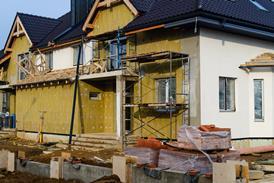







Reports suggest the upcoming plan will see a big move towards low carbon technologies and shift in emphasis from grant to regulation. But industry figures say its long delay and the cancellation of the ECO scheme last year could leave DESNZ without the workforce to deliver its goals.

How long can one wait with bated breath before the oxygen begins to run short? This is the experiment that the government and the retrofit industry appears to have been engaged in over the past year.
The Warm Homes Plan, Ed Miliband’s flagship energy efficiency policy, has been just around the corner for a while now. Initially expected in summer 2025, it was first pushed back to autumn, then simply “before Christmas”. That ultimately slipped into “in the new year”, and the last Building heard from the department was that it was coming soon – but probably not this week.
“I have been expecting it next week for about the last four months,” laughs David Weatherall, head of policy at the Building Research Establishment. Cracking wise about the unreliability of promised government policy announcements is a pastime as old as skimming stones, and the retrofit sector may have been comfortable with relieving its frustration this way, were it not for an unpleasant surprise in November’s Budget.
The decision to scrap the Energy Company Obligation (ECO), hailed by the chancellor as a cut to the public’s energy bills, has been greeted with dismay in the sector and has introduced an air of anxiety to the wait for the Warm Homes Plan. ECO, which has existed in one form or another for roughly three decades, was responsible for approximately 85% of the energy efficiency measures delivered under publicly-funded schemes in 2024.
The policy is not a government grant in the traditional sense, but rather a statutory obligation placed on larger energy suppliers. To avoid fines, these companies have to fund the installation of energy efficiency measures, primarily insulation and heating upgrades.
Unlike some other efficiency schemes, ECO was aimed squarely at poorer households, being available only to those on less than £31,000 a year, including income such as pension benefits.
“I think people sometimes don’t appreciate the extent to which that that has done a lot of the heavy lifting in terms of retrofit delivery,” Weatherall says, a sentiment backed up by firms working in and representing the sector, who say the impact of ECO’s cancellation, with no interim replacement, was immediate and severe.
Anna Moore, chief executive and founder of Domna, a retrofit and asset management company that delivers 10,000 retrofits a year, says the impacts were felt overnight. While her firm is “fairly diversified” across grant-funded, self-funded and investor-schemes, she says that some of her supply chain have more than 90% of their books in ECO work.
One such firm, she says, let half a dozen people go and came to Domna asking for a loan. “When there’s a stop-start, a little shop of 20 people or so can’t absorb four months of no cashflow, they go under,” she says.
Technically, the scheme is still operational until 31 March, but Moore says the tap began to turn off almost immediately. Under ECO, utilities companies were able to carry roughly a fifth of their expected spend over into the next iteration of the scheme (the latest of which was ECO4) in order to smooth out delivery.
“Now that there’s no expectation of an eco extension, a lot of utilities who are actually kind of close to the 80% mark are turning off the tap,” claims Moore. “That cliff edge has probably already been reached.”
Information collected by the Installation Assurance Authority (IAA), an industry body which provides an assurance framework to the sector, indicates that job losses are already mounting. Nigel Donohue, group chief executive of the IAA says 6,215 jobs have been lost in the past three months, with many times more expected to go in the next six months.
Nobody in the industry will push back and say that ECO was fit for purpose
Nigel Donohue, group chief executive, IAA
These industry figures have expressed frustration at a policy decision which has left fuel-poor households without an easily accessible energy efficiency scheme and installers without work, putting the delivery of future schemes in jeopardy. All this for what they characterise as a quick political win on energy bills.
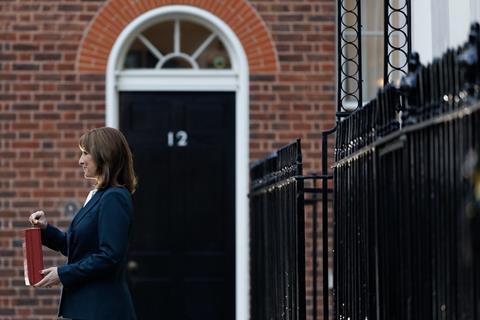
In November, Rachel Reeves said cutting ECO would save bill payers £150 each year. But this is disputed by the sector, which says the figure is closer to £50.
Regardless of the true figure, Moore says the move was “weirdly regressive” on its own terms, giving everyone – including the top 1% of earners – £50 a year while stripping fuel poverty support from 220,00 households earning less than £31,000 a year.
But, while bills may have been the political rationale for cutting ECO, it was not the only reason the scheme had a target on its back. In its final iteration, ECO4, the scheme became a major source of embarrassment for the government.
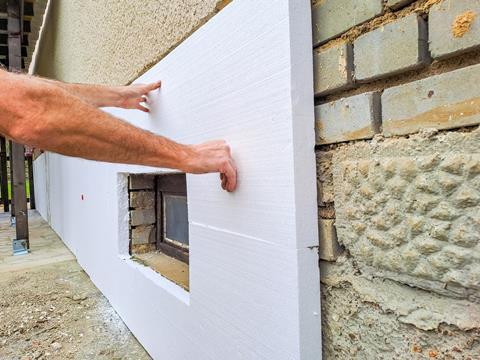
The National Audit Office published a damning report in October, with a particular statistic drawing headlines. The watchdog estimated that 98% of homes with external wall insulation installed under ECO4 and the Great British Insulation Scheme had major issues requiring remediation. This headline figure gave the impression to some that the scheme had been a complete and unremitting failure.
However, Domna’s Moore notes that external wall insulations accounted for only 3% of all work completed under ECO and that just 6% of the 98% were deemed to present immediate health and safety risks. Other work types had significantly lower levels of defects.
Both Moore and Donohue accept that ECO4 had serious flaws, particularly regarding compliance, and needed to be replaced. The NAO report found the energy department had limited oversight over an overly complex system with clear and fragmented roles, responsibilities and accountabilities.
But Moore argues that many of these criticisms were not unique to ECO, which had a similar compliance structure to other energy efficiency schemes, while Donohue suggests that an extension of the scheme – which the department had been consulting on – could have reverted to a simpler model that had worked in previous iterations.
ECO4 had seen a move away from single and double measures and towards a “deeper” retrofit approach, which Donohue describes as “eating the elephant”. He suggests that the scheme had been overly influenced by academics and “took the industry from being very capable of delivering single measures to this new world of deep retrofit”.
The BRE’s Weatherall agrees that “it is a challenge to orientate an energy supplier obligation around some of those deeper retrofit measures”, while insisting that the worst performing homes, which require this more substantive approach, is increasingly where the challenges lies.
“Nobody in the industry will push back and say that ECO was fit for purpose,” says Donohue. “It needed to change. But what it needed is a transitional change, and that’s not there.”
The IAA suggested a £500m “carry-on” scheme focused on single and double measures, to help keep installers in business while the details of the Warm Homes Plan are finalised. But these suggestions have fallen on deaf ears.
While there is an assumption that there will be some kind of policy or scheme targeted at fuel poor households in the Warm Homes Plan, it is unclear what shape it is likely to take or how long it will take to get up and running. “We’re expecting a fairly high-level document,” says Weatherall, indicating that it may be some time before the spending outlined within the plan can be realised. “We’re probably looking at a minimum six-month break,” says Moore.
We’ve seen very, very significant improvements [and] price falls in a lot of those technologies
David Weatherall, head of policy, Building Research Establishment
There is also the question of whether the plan will include equivalent levels of funding. In the spending review last summer, the government recommitted £13.2bn to the Warm Homes Plan and in the Budget announced an additional £1.5bn to tackle fuel poverty.
However, this came against the cut to ECO, which amounted to a £1.3bn reduction a year. Over the five years that the Warm Homes Plan will span, this amounts to £6bn.
This might reflect a change in how the government plans to achieve energy efficiency improvements across the country. Moore says there is a view in the department that “regulation is as good as cash”. That, she says, might be true for her to a contractor, because her clients have to do the work either way. “But that’s really not true for a fuel poor household or for a registered provider,” she notes.
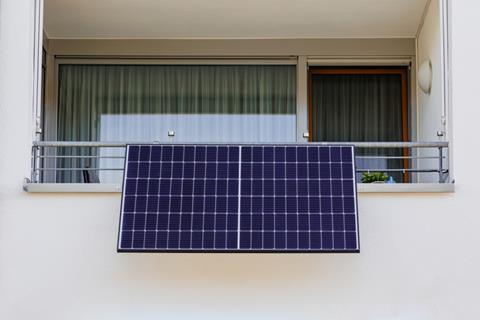
Indeed, briefings to the media in advance of the plan have spoken less of cash for insulation measures and more about support for low-carbon technology, including the relaxation of restrictions on plug-in solar panels, following an approach taken in Germany which saw more than a million homes buy them in less than two years.
More support is also expected for other low carbon technologies, which are seen as less risky than deep retrofit. “Very clearly the direction of travel is installation-light, very much focused on renewable solar, PV, battery storage, pumps, with lofting cavity where appropriate,” says Donohue. “The solid wall issue has not been value for money and it has impacted on the government’s risk appetite”.
The embrace of these technologies appears to have been broadly welcomed, with acknowledgement of big improvements in their performance and financial viability. “We’ve seen very, very significant improvements [and] price falls in a lot of those technologies,” says Weatherall. However, some were anxious to see that insulation and deep retrofit of the most challenging homes was not relegated to an afterthought.
“Until we live in a dream era of free and clean energy, it is imperative to slow the rate of heat loss through better insulation so that residents don’t need to pay for adding excess heat in order to stay warm,” says Kayla Friedman, from the Cambridge Institute for Sustainability Leadership. She says electric based heating without good insulation will” hurt homeowners financially” and that while batteries could help distribute peak loads, they “won’t fix the problem”.
Friedman also notes the mismatch between peak solar generation in the summer and peak energy loads for heating in the winter.
“We are keen that the scheme retains and has a focus on the coldest homes in the stock […] that do need that sort of significant holistic improvement, involving probably both insulation and low carbon measures,” adds Weatherall.
Dr Matthew Scott, policy manager at CIH, agrees that investment in solar needed to be “matched with a sustained and ongoing focus on reducing homes’ space heating demand”, noting that “the UK has some of the leakiest homes in Europe”.
He adds: “We also need to see further action to bring down the cost of electricity, so households can fully benefit from heat pumps. The plan should set out a roadmap for how levies and policy costs will be removed from electricity bills without making gas heating more expensive”.
Experts will also be looking closely at what the plan says about procurement. There is an expected move towards a more area-based approach, with a greater role for local authorities, which Donohue says he supports in principle, while raising concerns about capacity of councils to procure and deliver effectively. He worries this will lead to an overreliance on frameworks and tier who contractors “who then top-slice and use the SME supply chain to deliver that work.”
He adds that the shift to a more devolved delivery model could lead to large combined authorities being able to make more effective use of funding than smaller authorities in other parts of the country.
Moore agrees that procurement will be key. One of the benefits of ECO, she says, was that funding was flexible and accessible, not having to go through a staged public procurement process.
“If we’re shifting towards a government administered program, procurement needs to be fast, easy, transparent, not sclerotic,” she says, noting that other publicly-administered schemes have seen significant delays in getting funding out of the door.
The longer it takes for the Warm Homes Plan to actually start being spent, the more the industry is likely to lose capacity – which runs the risk of a repeat of scandals of the past. “Without the continuation of work, we’re going to end up with what we’ve had in the past, where there’s no funding, and all of a sudden there is a chunk of cash and a whole load of cowboys come out of the woodwork see it as an opportunity, and then deliver it badly and shut up shop,” says Donohue.
Energy is one area where a government that has been criticised for lacking direction came into office with a bold ideological vision and a passionate secretary of state. But the devil, as always, is in the detail, and it appears the Treasury’s cut to ECO has left Ed Miliband and his team with a lot to do in crafting a Warm Homes Plan that the sector can really believe in.







No comments yet