

















At a recent roundtable, senior industry figures discussed why change fails to stick, the cultural, emotional and organisational barriers that matter more than technology – and how leadership, timing and behaviour-focused strategies can turn pilots into lasting progress
“Construction doesn’t struggle with change,” said Brett King, Procore’s director of industry transformation. “We struggle with making change stick.”
It was a deceptively simple point, but one which framed the discussion that followed. Brought together in central London, senior figures from across contracting, consultancy and digital delivery gathered to explore why, despite years of investment in new platforms, processes and pilots, digital transformation in construction so often stalls before it delivers lasting value.

Hosted by Building and sponsored by Procore, the roundtable focused on digital change management rather than specific technologies. The conversation moved quickly beyond software and systems to examine the cultural, emotional and organisational barriers that prevent change from embedding, even when the tools themselves are sound.
Across the table, there was broad agreement that construction is already an industry in constant flux. Projects mobilise and demobilise at speed, teams reconfigure regularly, and external pressures continue to mount.
Yet digital initiatives are often treated as isolated events rather than ongoing behavioural change. That disconnect, participants suggested, is where many strategies begin to unravel.
Change is emotional before it is operational
One of the clearest themes to emerge was that digital change fails not because of poor technology, but because of human resistance and fatigue. Catherine Thompson, director of the technology and transformation practice at Deloitte, was direct about the scale of the issue. “As highlighted in Procore’s recent industry analysis, research from McKinsey & Company shows that up to 70% of digital transformation failures are people-related,” she said. “It’s not that the system doesn’t work. It’s that people don’t understand why they’re being asked to work differently.”
For Chris Hone, IT director at Fortem, the challenge is amplified by scale. Supporting more than 650 operatives working remotely has forced a rethink of what success looks like. “Just because a system is live doesn’t mean the change has happened,” he said. “If people aren’t feeling the benefit, it hasn’t stuck.”
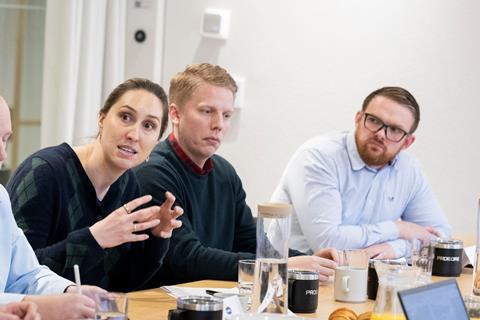
That sense of unfinished transformation resonated widely. Rather than neat end points, digital change increasingly feels continuous – and several participants warned this is precisely where leadership attention often falters. Stu Collins, senior manager in Deloitte’s major programmes team, described the reality as “unending change”, driven by regulation, client demands and rapidly evolving technology. “People are being expected to absorb continuous shifts while still delivering projects,” he said. “The risk is that leadership mentally moves on long before teams have adapted. When executives assume the job is done, while delivery teams are still in the dip, that’s where change starts to unravel – and the strain really shows.”
But Andrew Crawford, head of IT business solutions at Graham, explained that change, and particularly longstanding change, is integral to the industry’s efforts to attract young talent.
“l’ve seen the introduction of technology be an asset but you can also see these changes go away,” he said. “What ways do we have to engage people? How do you create that visibility? Meangingful and embedded change is needed for that.”
Why pilots rarely become business as usual
So, if change is constant and necessary, why does progress still feel uneven?
One reason, several participants suggested, is the industry’s reliance on pilots that never quite translate into everyday practice. King noted that construction is “very good at experimenting and very bad at turning things off”, with old and new processes often running in parallel long after decisions have been made.
That tendency to manage perception rather than performance reflects a deeper cultural issue. Oliver Connew, associate at CRBN Solutions, warned that data can sometimes be used defensively. “There’s a risk of hiding behind data,” he said. “It becomes ‘that’s what the numbers say’ instead of using information to challenge decisions and improve outcomes.”
Others argued that shared, transparent data can have the opposite effect. Thompson suggested that when insight is collectively owned, it can create psychological safety. “If everyone knows where the data comes from, it’s easier to raise concerns and have honest discussions,” she said.
But the consensus was that running, and progressing, pilots is one of the best ways to drive change. As Thompson observed, “It is better to fail fast and learn a lesson, than to put off change.”
Timing, trust and change fatigue
Even when intent is right, timing can derail progress. Hone described how multiple initiatives landing simultaneously can overwhelm delivery teams. “Fifty small changes landing at once isn’t small,” he said. “At site level, that can fundamentally change someone’s role overnight.”
That observation prompted a broader discussion about change fatigue. Rather than pushing forward relentlessly, some argued that leaders need to be comfortable slowing down. Hone explained that Fortem has deliberately paused rollouts in the past to allow earlier changes to bed in. “If we don’t give people time to adjust, we don’t get the benefit,” he said. “We just add friction.”
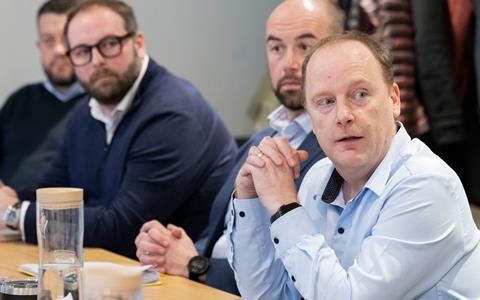
Sequencing was another recurring theme. Collins advocated for a portfolio view of change rather than isolated programmes. “You need to look at everything that’s landing on the business at once and ask what can realistically succeed now,” he said. “Not just what’s loudest or newest.”
Trust also emerged as a critical factor. Several of the roundtable participants noted that previous failed implementations make teams sceptical. As King put it, “People remember the last system that didn’t work. Every new initiative is judged against that experience.”
Making digital change real on site
For digital transformation to stick, the group agreed, it must be grounded in the realities of site life. Ben Jowett, head of digital transformation at SES, reflected on earlier shifts that paved the way for today’s tools. “The move from paper to handheld devices was massive,” he said. “We underestimate how much that changed behaviour.”
That behavioural focus remains essential. Scott Laird, AI and technical director at Reds10, described how the business invested heavily in training and ownership rather than technology alone. “We took the owner of the business on the journey,” he said. “Once that belief was there, it stopped being a digital project and became how we operate.”
Around the table
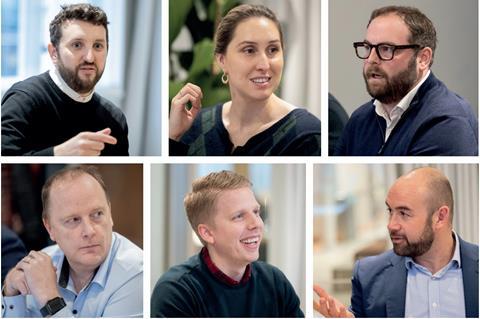
- Stu Collins, senior manager, major programmes, Deloitte
- Oliver Connew, associate, CRBN Solutions
- Andrew Crawford, head of IT business solutions, Graham
- Chris Hone, IT director, Fortem
- Ben Jowett, head of digital transformation, SES
- Brett King, director of industry transformation, Procore
- Scott Laird, AI and technical director, Reds10
- Matt Procter, head of business development, Chasetown Civil Engineering
- Catherine Thompson, director of the technology and transformation practice, Deloitte
Capability building was also highlighted as a long-term differentiator. Matt Procter, head of business development at Chasetown Civil Engineering, emphasised the importance of internal support. “You can’t just deploy something and walk away,” he said. “We’ve focused on training the trainer so learning continues after the initial rollout.”
Across the table, there was agreement that digital change must make life easier for site teams. Crawford stressed that if benefits are not immediately visible, adoption falters. “If it feels like extra admin, people will find ways around it,” he said.
Leadership and accountability
For senior leaders around the table, the implication was clear: making change stick is not a sponsorship role but a behavioural one. Several participants stressed that transformation fails less because people resist change, and more because leadership reinforcement fades too quickly. New systems are launched, messages are communicated – but leaders revert to old habits under pressure, signalling that the change is optional rather than fundamental.
Thompson argued that digital initiatives fail when they are delegated too far down the organisation. “If leadership isn’t actively involved, people assume it’s optional,” she said.
That message resonated with Collins, who noted that ambiguity quickly undermines momentum. “If people don’t know whether this change really matters, they’ll default to what they know,” he said.
At the same time, several contributors warned against placing the burden solely on digital or IT teams. King emphasised ownership must sit with the business: “Change doesn’t belong to IT. It belongs to everyone who delivers work.”
Measuring success differently
Another barrier to embedding change is how success is measured. Several participants noted that traditional KPIs often fail to capture behavioural improvement. Hone suggested organisations need to rethink what good looks like: “If we only measure whether a system is switched on, we miss whether it’s actually being used well.”
Connew added that metrics should encourage learning rather than blame. “If people feel punished for transparency, they’ll stop engaging,” he said.
Priorities for making change stick
When panellists reflected on what needs to happen next if digital transformation is to deliver lasting value, consistency was a priority. Jowett argued the industry must stop reinventing approaches on every project. “We know what works,” he said. “The challenge is applying it consistently.”
Skills and support were equally important. Procter stressed that ongoing training is essential. “People need to feel confident, not exposed,” he said.
For Thompson, the answer lies in honesty. “We need to be realistic about how hard change is,” she said. “Acknowledging that makes it easier to manage.”
King concluded by returning to the theme that opened the discussion. “Making change stick isn’t about chasing the next tool,” he said. “It’s about aligning people, purpose and process. When those come together, digital transformation stops being something we do and starts being how we work.”
A shift from delivery to durability
There was a clear sense that the industry is entering a more mature phase of digital transformation. The question is no longer whether construction should adopt new systems or platforms, but whether it has the patience, discipline and leadership to see those changes through.
Several participants reflected that, historically, construction has been good at responding to immediate pressures but less comfortable with long-term behavioural change. Digital initiatives often begin with urgency but lose momentum once the initial rollout is complete. That pattern, the group agreed, is no longer sustainable in a sector facing tightening margins, increasing scrutiny and rising expectations from clients and regulators alike.
Deceleration is not in sight
Collins returned to the idea of “unending change”, noting that the pace of external pressure is unlikely to slow. “We’re not going back to a stable environment where nothing shifts for five years,” he said. “That means organisations have to get better at absorbing change without burning people out.”
For Hone, that requires a different definition of success. “We have to stop thinking about transformation as a finish line,” he said. “It’s a capability we build over time. The better we get at it, the less disruptive it becomes.”
Five lessons from the roundtable
1. Change is a people issue first
Most digital initiatives fail because of human factors, not technology. Engagement, trust and understanding matter more than functionality – and require sustained leadership attention.
2. Pilots are easy; embedding is hard
Testing new systems is only the start. Real value comes when old processes are switched off and leaders consistently reinforce new ways of working long after launch.
3. Pace matters
Too many changes landing at once leads to fatigue. Leaders must actively sequence initiatives, not simply approve them.
4. Site reality must lead
Digital tools only stick when they clearly make life easier for delivery teams. If it feels like extra admin, it will be bypassed – regardless of strategic intent.
5. Leadership sets the tone
Visible, consistent leadership behaviour is decisive. When leaders role-model new ways of working and treat transformation as a long-term capability rather than a finite project, change has a far greater chance of sticking.
Others pointed to the need for humility and honesty. Connew argued that organisations must be willing to admit when change has not landed as intended: “If we pretend something has worked when it hasn’t, we just store up bigger problems for later.”
Leadership was repeatedly identified as the deciding factor. Thompson emphasised that sustained change requires visible commitment, not just approval. “People watch what leaders do more than what they say,” she said. “If leadership reverts to old behaviours under pressure, everyone else will too.”
That responsibility cannot sit only with digital or IT teams. Jowett stressed ownership must be collective. “Digital change fails when it’s seen as someone else’s job,” he said. “It has to be embedded in how the business operates, not bolted on.”
Looking ahead, there was cautious optimism. While the challenges of making change stick remain significant, participants agreed that the industry is better equipped than it was even a few years ago. The conversation has shifted from tools to behaviours, from deployment to durability.
As the session concluded, Procore’s Brett King returned to his opening theme: “The industry doesn’t lack innovation. What it needs now is follow-through. When we focus on people first and technology second, that’s when change has a chance of lasting.”