
















At the end of another busy year, here is a reminder of some of the interviews that stood out for our readers
Every week Building talks to the key people working in construction.
We meet industry leaders, key players and also the innovators who are changing the way we work. Here we have compiled a list of the most-read interviews from the past year.
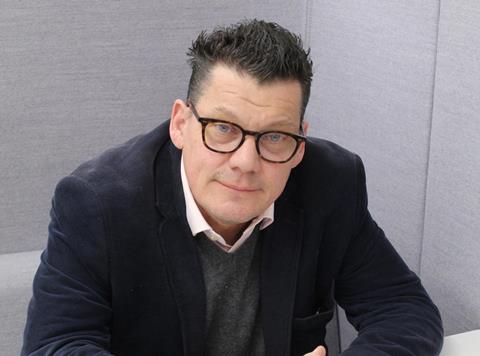
‘We tried and we tried and we very nearly got there’: Osborne’s finance chief on the company’s collapse – and lessons the industry can learn
For a while, getting on for two years ago now, it seemed like a lot of firms were going bust, one after the other.
Looking back, the run started when Henry Construction, a £400m turnover business which specialised in residential work, sank in early June 2023.
Its demise was confirmed on a blazing hot day, the sort that makes people think life feels good. A few months later, it was followed by Buckingham, a contractor whose work on the Fulham and Liverpool football stadium rebuilds meant its collapse made national headlines.
After Buckingham went, London M&E specialist MJ Lonsdale went down, seemingly out of the blue, just a few weeks later at the start of October. Another shock.
As the autumn of 2023 wore on, rumours about the health of ISG began to circulate – and with good reason, it would turn out. It too went out of business last September.
Also adding to the gloom in that autumn of 2023 were Laing O’Rourke’s results; the country’s biggest private contractor announced in November that year that it had racked up an astonishing £288m pre-tax loss, the biggest in its history.
At the tail end of this period, which lasted perhaps eight or nine months, Osborne, a historic name that had been in business almost 60 years, also went. Its collapse in April 2024 drew a line under a brand that had, for better or worse, always been seen as an old-fashioned, gentleman contractor.
‘It’s time to go when the projects you worked on are being redone …’ Core Five’s James Clark on Davis Langdon, starting afresh and why he’s off to see the world

James Clark can’t help but notice that time has marched on. One of the founders of London cost consultant Core Five, he is going through a list of the projects he would later work on after joining Davis Langdon as a graduate QS in the late 1980s.
“Chiswell Street, Bunhill Row, Plough Place…” He trots them off in quick succession. “I looked after Woolgate Exchange for [property investor] MEPC.”
It is pointed out to him that it has recently been redeveloped, this time by Mace for Stanhope. “Another one,” he sighs. “It’s another reason why I have to retire. Too many of the projects that I built are being redone. It’s depressing.”
Click here to read the full interview
‘I’m here as a change agent’ – Bam’s construction boss on Co-op Live, doing the right things and… dealing with snakes
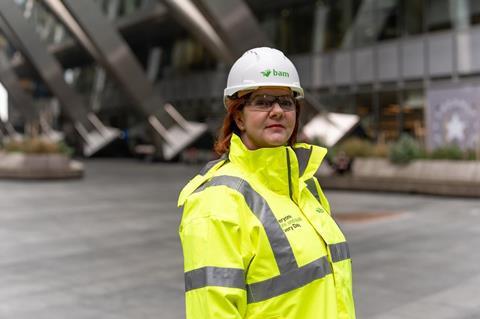
“It’s risk assessment of a kind, if you like.” Kim Sides is recalling the time when she was forced to jam a special stick behind the head of a snake that had found its way into her path.
She was a young girl and the snake in question was a taipan – and for anyone who knows anything about snakes, they are not to be trifled with, given they are widely considered to be among the most venomous in the world.
One bite from the inland taipan has been estimated to release enough venom to kill 100 humans. Sides was six or seven when she stuck the snake stick – which has a V at its apex – behind the taipan’s head.
‘I needed to do something else’ … Steve Mason on life at (and after) Mace, finding his mojo at Avison Young and trying to ditch the tie
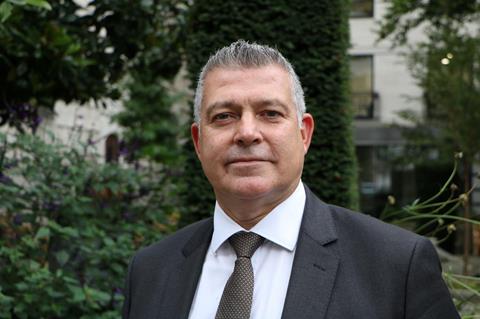
“I’m very proud to say: I was the only QS that was invited.”
Steve Mason is recalling the time when he turned up to Steve Pycroft’s leaving bash at The Ivy in London, himself a few weeks into saying goodbye to the firm where he had spent close to a quarter of a century.
Back in his 20s, Mason had been recruited to the business by Pycroft, Mace’s then chief executive, “when an interview with Mace was over a gin and tonic in the Oxo Tower – that used to be his favourite restaurant”. Mason thought he might go into Mace’s legal team because he had recently completed a masters degree in construction law from King’s College, London, and he liked it. But he made his name in cost consulting instead.
Click here to read the full interview
‘We’ll get our fair share…’ The Wates pair hatching a plan to create a £250m fit-out business
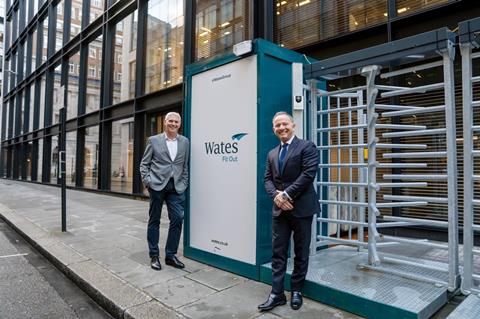
“I never thought it would be the end of me…” Lee Phillips had turned 54 a month before ISG collapsed into a heap last September.
He had been there a few weeks shy of nine years – an earlier stint in the 1990s when the firm was known as Interior and headed up by David King accounted for a further three – when the business, having long since teetered, finally toppled. Overnight, he found himself without a job having been in charge of the fit-out part of ISG, the one considered to be the jewel in its crown.
“I had to take some time out, to play things over,” Phillips admits, “but I’ve always believed in myself.”
‘You’re operating in the grey space, making decisions with a lot of unknowns’: Katy Dowding on two years at the top of Skanska UK

Katy Dowding is not where she should be. Our interview was supposed to take place at Skanska UK’s South Molton site, just down the road from Bond Street Tube station, where it has broken ground on the £140m first phase of the mixed-use scheme for Grosvenor and Mitsui Fudosan UK. But there has been a change of plan.
Dowding emerges from a meeting room at the tier one contractor’s City office at 51 Moorgate, extending a hand covered by a medical wrist support and walking slightly gingerly. The PR had warned she had hurt her knee, and it turns out a skiing accident has resulted in a severed cruciate ligament and a possible broken bone in her hand. Walking does not hurt too much, it is just that uneven surfaces are not recommended, so site visits are a no-no.
Still, it must have been very painful at the time? “Let’s just say, I think I said something to the effect of ‘gosh that hurts’ but with stronger words,” she deadpans with a grimace.
Dowding, 55, likes to be on the move. A big part of being the CEO and president of Skanska UK is obviously travelling around the country visiting project teams on site. “It’s my favourite thing, getting out on site,” she says, clearly annoyed about not being able to get to two new sites – South Molton and 7 Millbank, the former British American Tobacco HQ in Westminster – because of her knee. “I will find a way, I will get to the projects, even if not on the actual site.”
Click here to read the full interview
‘I’ll miss it but it’s time for someone else to have a go.’ Andrew Davies gets ready to leave Kier
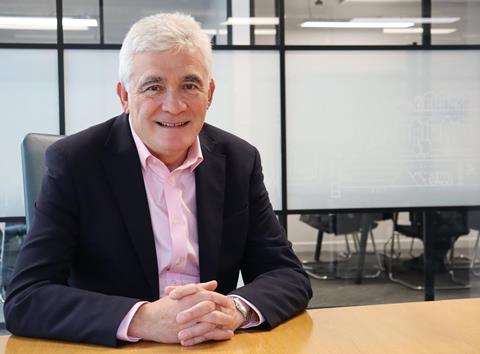
“Oh yeah, I’m bound to miss it.” Andrew Davies, the man who has been chief executive of Kier for the past six and a half years, is leaving later this month. Not to another job, no non-exec roles lined up. Nothing. Time for someone else to have a go, he says.
He officially leaves on 31 October. So, then, what is he going to do on 1 November? Handily, it’s a Saturday. He didn’t know until it’s pointed out to him. “In that case, ride my bike.”
Even chief executives have to go through the rigmarole of leaving a company, just like everyone else. “They’ll take my email off me, I’ll hand in my pass just like any other employee.” And that will be it. Slate wiped clean and then the new man, Stuart Togwell, currently in charge of the firm’s construction business, takes over.
‘It will take time’ … WSP’s head of structures Claire Gott on industry gender parity, juggling work and life and going to the Palace
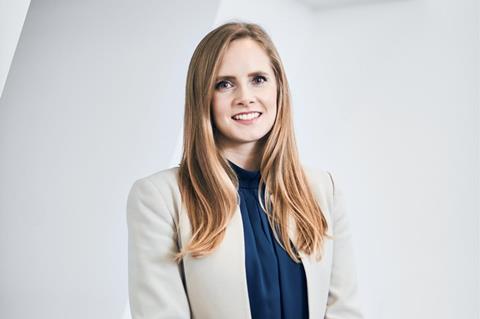
WSP’s head of building structures thinks for a minute and then says: “If I’m being brutally honest, it’s not where my strength was.”
Claire Gott is mulling whether she misses being an engineer. She has been at the firm since she graduated from Southampton University with a civil engineering and architecture degree in 2010.
She loved being an engineer but, in the time since joining the Canadian-owned business 15 years ago, she has moved far away from her initial job as a graduate on the Alder Hey children’s hospital in Liverpool.
Click here to read the full interview
‘We’ve really scaled this business to being number one in our market’: T&T’s UK boss Patricia Moore on competing at the top
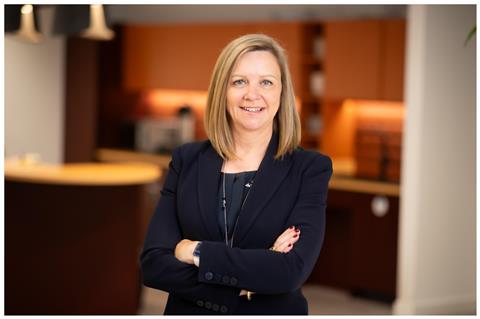
What difference does six years make? Last time Building interviewed Patricia Moore, at the start of 2019, she had just taken on the UK managing director role at Turner & Townsend. Back then, as the country navigated Brexit uncertainty, the UK business had a £250m-turnover and nearly 3,000 UK staff. For her part, Moore appeared unfazed by market challenges at the time and showed full confidence in T&T’s ability to win big strategic projects and invest in rapidly changing digital technology.
Fast forward to now and arguably the political and economic situation in the UK and globally has become even more unpredictable, with conflicts in Ukraine and the Middle East disrupting energy supplies and trade, high inflation and interest rates, US tariffs, and a UK Labour government that has raised taxes on businesses and is struggling to deliver on economic growth.
The backdrop may be unstable, but T&T’s fortunes have been impressively solid. It has been on a turbocharged growth trajectory: across all international regions the latest figures show the group’s income was £1.5bn with pre-tax profit of £200m for the year to April 2024, while the UK’s income was £591m on £86m pre-tax profit (for the year to April 2025) and staff numbers exceeded 6,000. Moore’s confidence looks to have been well founded.






No comments yet